Lessons from the Tropics: How Bandung's Punishing Climate Reveals the True Strength of Honda Motorcycles
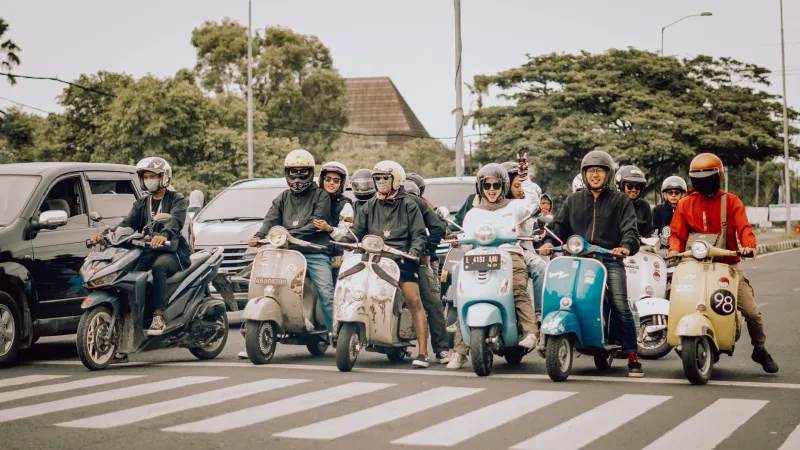
When most American riders think about motorcycle testing grounds, names like the Mojave Desert or the Rocky Mountains come to mind. Few would consider a mid-sized Indonesian city perched on a volcanic plateau as a benchmark for mechanical endurance. Yet at Honda Motor Bandung, we have come to understand that our local environment — shaped by relentless humidity, seasonal monsoon rains, and equatorial heat — functions as one of the most rigorous real-world proving grounds a motorcycle can face. What our mechanics learn here has implications that extend far beyond the streets of West Java.
A Climate Unlike Anything Most US Riders Experience
Bandung sits approximately 2,400 feet above sea level in the highlands of West Java, Indonesia. While its elevation moderates temperatures compared to coastal Indonesian cities, the city still endures average humidity levels that routinely exceed 80 percent. During the wet season — which can stretch from October through April — daily rainfall is not a possibility but a near certainty. Motorcycles parked outside face repeated soaking, followed by partial drying, followed by another soaking. This cycle is relentless.
Compare this to a typical American riding environment. A rider in Phoenix, Arizona, battles dry desert heat and UV exposure. Someone commuting through Chicago contends with road salt in winter. A weekend enthusiast in North Carolina deals with occasional heavy rain. Each of these environments is demanding in its own right — but none of them combine sustained heat, persistent moisture, and near-daily precipitation the way Bandung does. This is precisely why the durability data our service team accumulates is so valuable.
What Humidity Does to an Engine — And How Honda Addresses It
One of the first things our technicians at Honda Motor Bandung observe in high-humidity environments is the accelerated rate at which certain engine components degrade when maintenance schedules are neglected. Moisture infiltrates air filters more quickly, reducing filtration efficiency and allowing particulate matter into the combustion chamber. Carburetors — still found on many models serviced in our region — are especially susceptible to moisture-induced fuel contamination, leading to rough idling and difficult cold starts.
Honda's engineering response to these challenges is instructive. Models distributed across Southeast Asia are often equipped with sealed electrical connectors, corrosion-resistant coating on critical chassis points, and air intake systems designed to manage humid airflow more effectively. American Honda riders may not realize that the engineering philosophy informing their own bikes was refined, in part, through performance data gathered in climates like ours.
For US riders, the practical takeaway is straightforward: even in less extreme conditions, moisture management matters. Regularly inspecting and replacing air filters, keeping fuel systems clean, and ensuring that electrical connections are properly sealed can prevent the same degradation our mechanics address every day — just on a slower timeline.
Rust, Corrosion, and the Battle Against Oxidation
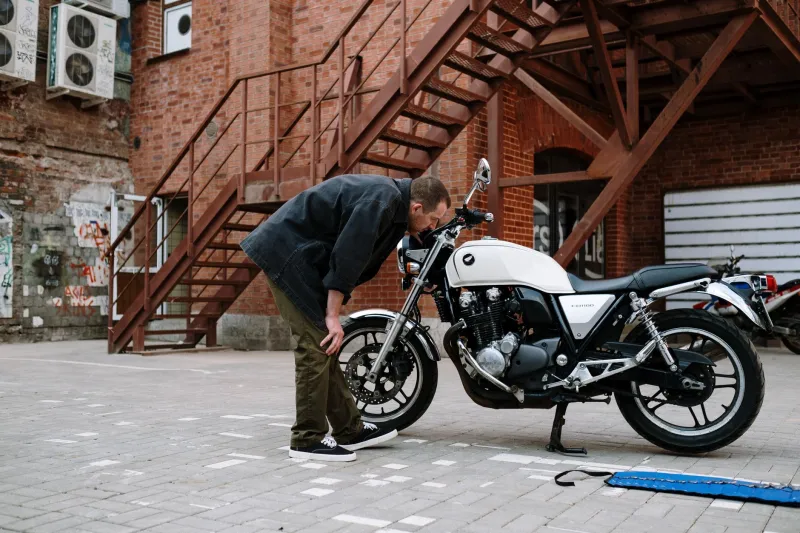
Perhaps no challenge is more visible in our service center than corrosion. In Bandung's humid atmosphere, exposed metal surfaces — brake rotors, exhaust headers, chain links, and frame bolts — are in a constant battle against oxidation. Motorcycles that arrive at our facility after even a single wet season without proper care often show rust formation that surprises first-time customers.
Our mechanics have developed a disciplined approach to corrosion prevention that American riders would benefit from adopting. After every significant rain exposure, we recommend wiping down exposed metal surfaces and applying a light coat of protective spray to vulnerable points. Chain lubrication is performed more frequently here than manufacturer schedules might suggest — because in a wet climate, lubricant is washed away far faster than in dry conditions.
For American riders who live in coastal states like Florida, Louisiana, or along the Pacific coast — where salt air introduces its own corrosive element — these habits are not merely useful; they are essential. The lessons our team has learned combating tropical humidity translate directly into best practices for salt-air environments.
Electrical Systems Under Pressure
Moisture and electronics are natural adversaries. In our workshop, we frequently address electrical issues that trace back to water infiltration — corroded battery terminals, degraded wiring insulation, and compromised sensor connections. Bandung's climate compresses the timeline on these failures, making them visible within months rather than years.
This accelerated failure rate has made our technicians highly proficient at diagnosing electrical issues that might otherwise go unnoticed until a bike refuses to start on the side of a highway. Honda's commitment to waterproofing key electrical components has improved substantially over successive model generations, and our service records reflect that newer Honda models demonstrate noticeably better moisture resilience than their predecessors.
American riders — particularly those who store bikes outdoors or ride through rain regularly — should treat electrical maintenance as a priority, not an afterthought. Applying dielectric grease to connectors, inspecting battery terminals seasonally, and ensuring that wiring harnesses are properly secured and away from heat sources are habits that our team considers non-negotiable.
Tire Performance and Road Surface Interaction
Bandung's roads present another dimension of the testing equation. Wet asphalt, occasional flooding in lower districts, and road surfaces softened by heat create traction conditions that demand reliable tire performance. Our service center sees a higher incidence of tire-related consultations during the wet season, and we have developed strong preferences for tire compounds and tread patterns that balance wet-weather grip with longevity.
American riders who encounter wet conditions — particularly those in the Pacific Northwest or the Gulf Coast states — can draw from this experience. Tread depth inspection, proper inflation management (which shifts slightly in humid conditions due to temperature variation), and awareness of wet braking distances are all areas where our team's accumulated knowledge offers practical guidance.
What American Honda Owners Can Take Away
The climate in Bandung is not something most American riders will ever encounter directly. But the mechanical truths it reveals are universal. Moisture degrades. Heat stresses. Corrosion spreads. And a motorcycle that is maintained with discipline — regardless of where it operates — will outlast and outperform one that is not.
At Honda Motor Bandung, we take pride in the expertise our environment has forced us to develop. Our technicians work with conditions that compress years of normal wear into a single season, and the protocols we have established reflect that intensity. The Honda motorcycles we service are built to endure — and with the right maintenance habits, so are the ones in your garage.
We invite American Honda enthusiasts to consider what tropical conditions have taught us: that reliability is not simply a product specification. It is the result of consistent care, informed by real-world experience, applied with discipline. That lesson translates to every climate, on every road, on every Honda motorcycle.