Two Wheels, Two Worlds: What Indonesian Motorcycle Culture Can Teach American Honda Riders About Their Own Bikes
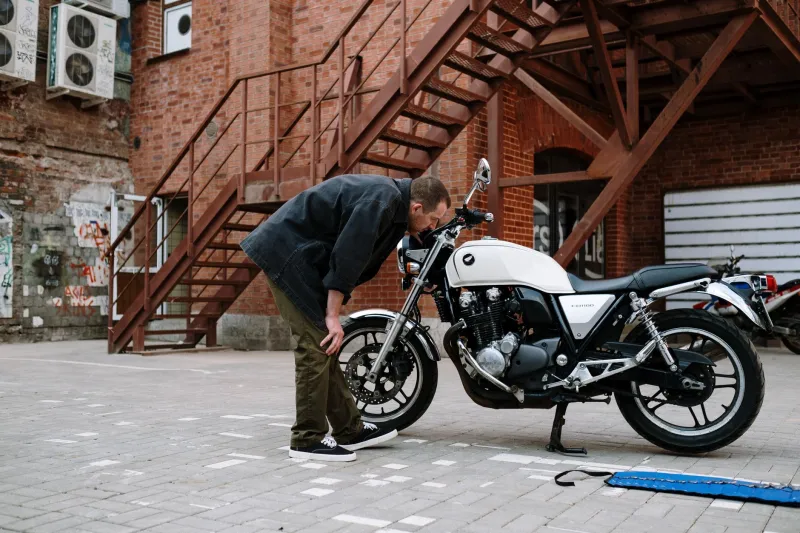
Picture a Saturday morning ride through the Blue Ridge Parkway — the kind of leisurely, scenic cruise that defines motorcycle culture for millions of American enthusiasts. Now picture a Honda Beat weaving through Bandung's Jalan Merdeka at 7:00 a.m., carrying a father, his school-age daughter, and a bag of groceries balanced across the footboard. Both images involve a Honda motorcycle. Both involve a rider with genuine attachment to their machine. But the relationship between rider and bike could not be more different.
At Honda Motor Bandung, we operate at the intersection of these two realities. We service motorcycles that are used for everything from family transportation and food delivery to small business logistics and daily commuting across mountain roads. The culture surrounding motorcycle ownership in our region is one that most American riders have never encountered — and in our view, that is a gap worth closing.
Motorcycles as Infrastructure, Not Recreation
In the United States, motorcycle ownership is predominantly a choice. Riders choose two wheels for the freedom, the aesthetics, the community, or the fuel efficiency — but for most, a car remains the primary vehicle. A motorcycle is something you ride when conditions and mood align.
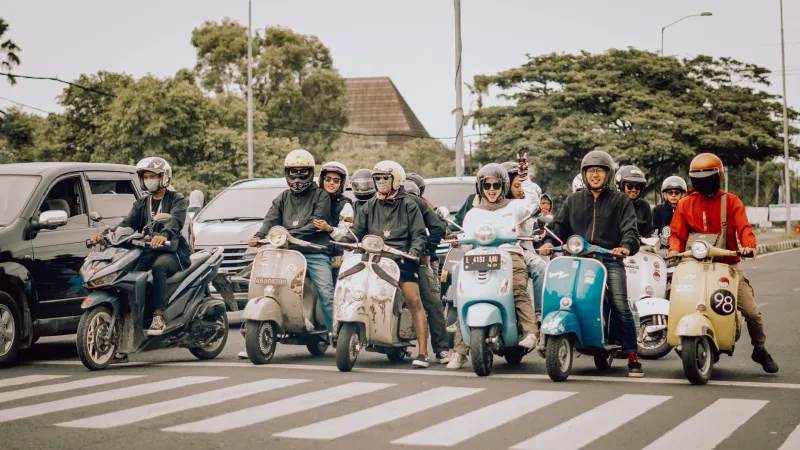
In Bandung and across Indonesia more broadly, this framing is largely reversed. Indonesia is the third-largest motorcycle market in the world, and the country's approximately 120 million registered motorcycles serve as the backbone of daily transportation for tens of millions of families. Public transit infrastructure, while improving, cannot yet meet the density and geographic complexity of cities like Bandung. Motorcycles fill that gap — efficiently, affordably, and at scale.
This distinction shapes everything about how riders here relate to their machines. When your livelihood depends on your motorcycle starting every morning, you develop a different kind of attentiveness to its sounds, its feel, and its needs. You do not wait for a warning light. You listen.
The Maintenance Philosophy That Emerges from Necessity
Our service center at Honda Motor Bandung sees a remarkable cross-section of customers — students, small business owners, delivery workers, civil servants, and retirees. What unifies them, regardless of income level or motorcycle model, is a practical intimacy with their machines that goes beyond what most American riders cultivate.
Many of our customers perform basic maintenance themselves — not because they are motorcycle enthusiasts in the hobbyist sense, but because they cannot afford downtime. Chain tension checks, tire pressure monitoring, and brake pad inspections become habitual, almost unconscious behaviors. When these customers bring their bikes to us for more complex service, they arrive with detailed observations: "The engine hesitates slightly at low RPM when the weather is cold," or "The front brake feels softer than it did last week." This kind of attentiveness allows our mechanics to diagnose problems faster and more accurately.
For American riders — many of whom rely heavily on scheduled dealership service and dashboard indicators — this philosophy represents an opportunity. Developing a more hands-on familiarity with your Honda, even at a basic observational level, can catch issues earlier, reduce repair costs, and deepen your connection to the machine. You do not need to be a mechanic. You need to pay attention.
Community as a Maintenance Network
In American motorcycle culture, community often manifests through clubs, rallies, and group rides — social structures built around shared enthusiasm. These communities are vibrant and meaningful. But in Bandung, motorcycle community functions with an additional practical layer that American riders might find unfamiliar.
Informal networks of knowledge-sharing are embedded in neighborhoods, workplaces, and family structures here. A mechanic who lives on your street becomes a trusted resource. A colleague who rides the same Honda model shares tips about which local workshop offers the best value for a particular repair. Word of mouth about parts quality, fuel additives, and service timing travels through these networks with the urgency of genuinely useful information — because for many riders, that information has direct economic consequences.
At Honda Motor Bandung, we are part of this network. We do not merely process service appointments; we participate in an ongoing community conversation about motorcycle care. Our technicians are frequently asked questions that go beyond the immediate repair — about riding habits, about road conditions on specific routes, about whether a particular modification is advisable given how a customer uses their bike. This consultative relationship is, in our view, what a dealership and service center should aspire to be.
American Honda riders have access to similarly rich communities — online forums, local riding groups, Honda owner networks — but the practical, knowledge-sharing dimension of these communities is sometimes underutilized. Engaging more deeply with fellow riders as sources of mechanical wisdom, not just social connection, is something Indonesian riding culture models exceptionally well.
Riding Habits That Reflect a Different Relationship with Risk
It would be incomplete to discuss Southeast Asian motorcycle culture without acknowledging the realities of riding in dense urban traffic. Bandung's streets can be chaotic by American standards — lane discipline is fluid, intersections are negotiated through instinct and eye contact, and the sheer volume of two-wheeled traffic creates a dynamic that demands constant situational awareness.
Riders here develop what might be called a heightened traffic intelligence — an ability to read the intentions of surrounding vehicles, anticipate gaps, and make rapid micro-decisions that keep them moving safely through congestion. This is not recklessness; it is a refined skill set born from daily practice in complex environments.
American riders, who typically operate in less congested conditions and with stronger lane enforcement, may find that their situational awareness is less developed by comparison. Urban riding skills — reading traffic flow, managing visibility in intersections, understanding the blind spots of trucks and buses — are areas where the daily experience of Indonesian commuters offers a kind of practical curriculum. Seeking out advanced urban riding courses, or simply spending more time riding in city traffic rather than exclusively on open highways, can build the same kind of instinctive competence.
What a Deeper Connection to Your Honda Actually Looks Like
The core insight that Honda Motor Bandung's position in Indonesian riding culture offers to American enthusiasts is this: a motorcycle is most fully appreciated when it is genuinely needed, not merely enjoyed.
That does not mean American riders should feel guilty about recreational riding — far from it. But it does suggest that approaching your Honda with the same seriousness that a Bandung commuter brings to theirs — maintaining it diligently, understanding its systems, integrating it into a community of shared knowledge — will transform the quality of your ownership experience.
The gap between American and Southeast Asian motorcycle culture is real, but it is not unbridgeable. It is a gap in perspective, not in passion. Both cultures love their Hondas. Both communities take pride in their machines. The difference lies in what necessity has taught Indonesian riders about attentiveness, care, and community — lessons that translate beautifully to any rider, anywhere in the world.
At Honda Motor Bandung, we believe that understanding where motorcycles come from — culturally, not just mechanically — makes you a better rider. We hope this perspective, drawn from our daily work in the heart of West Java, offers American Honda enthusiasts something worth carrying with them on their next ride.