From Overlooked to Overpriced: The Exact Steps American Honda Owners Use to Add $1,500 or More Before Listing Day

Every Honda motorcycle that sells below its potential value has a story. Usually, the story involves a seller who waited too long, skipped a few maintenance items, lost track of their paperwork, and listed the bike in whatever condition it happened to be in on the day they decided to sell. The buyer who showed up—if one showed up at all—negotiated hard, pointed to every visible flaw, and walked away with a deal that the seller accepted because the alternative was waiting longer.
At Honda Motor Bandung, the sales floor produces a different kind of story. Bikes that arrive with complete documentation, targeted pre-sale preparation, and visible evidence of consistent care sell faster and at prices that reflect their actual quality. The principles behind those outcomes are not unique to Indonesia—they apply with equal force to American Honda owners who are willing to approach the resale process strategically rather than reactively.
What follows is a sequenced framework drawn from Bandung's dealership observations, adapted for the American market.
Step One: Locate and Organize Every Document Before You Do Anything Else
The most common mistake American sellers make is treating documentation as an afterthought—something to gather once a buyer expresses interest. By that point, the negotiating dynamic has already been established, and missing or incomplete records become leverage for the buyer rather than justification for the asking price.
The first step in any serious pre-sale process is a comprehensive document audit. This means locating the original title, any lien release documentation, the owner's manual, and every service record in existence—dealer invoices, independent shop receipts, even notes from self-performed maintenance with part numbers and dates.
Once located, these documents should be organized chronologically and presented clearly. A buyer reviewing a neat folder of sequential service records experiences a fundamentally different impression than a buyer handed a pile of crumpled receipts from a glove compartment. The content may be identical, but the presentation communicates care—and care commands a premium.
For American Honda owners who have gaps in their service records, now is the time to fill them. Contact the dealers and shops where service was performed and request copies of historical invoices. Most shops retain records for several years and will provide them on request. Every recovered document strengthens the paper trail that justifies the asking price.
Step Two: Address the Mechanical Items That Buyers Will Discover Anyway
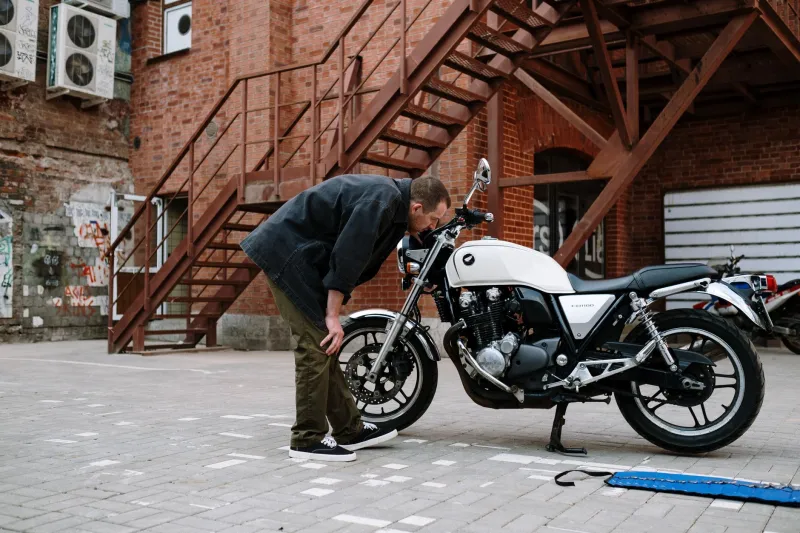
Experienced motorcycle buyers arrive with a checklist, and the items on that checklist are predictable. Tire tread depth. Chain condition and adjustment. Brake pad thickness. Fluid levels and color. Fork seal integrity. Battery condition. Any buyer who finds a deficiency in one of these areas will either walk away or negotiate a deduction that exceeds the actual cost of the repair.
The calculation is straightforward: a set of tires that costs $200 to replace will typically produce a negotiating concession of $300 to $400 from an asking price. A chain and sprocket set that costs $150 in parts and labor becomes a $250 deduction in a buyer's counteroffer. Addressing these items before listing eliminates the leverage and preserves the asking price.
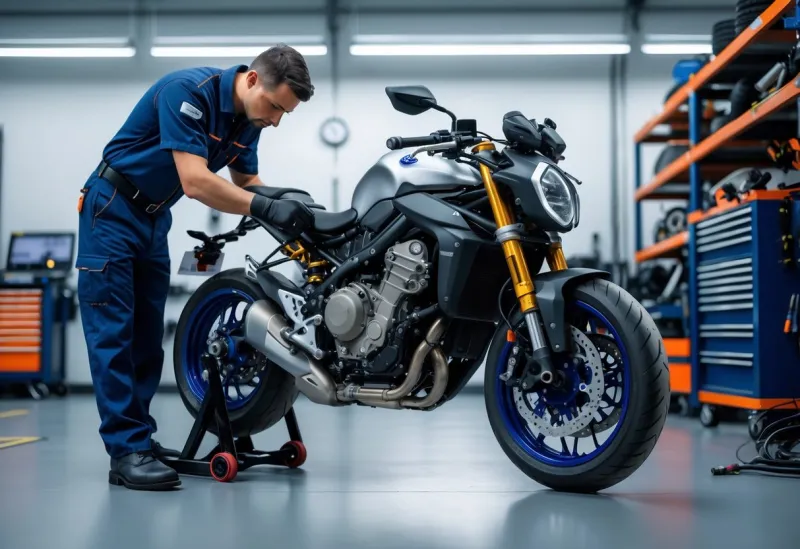
Bandung's pre-sale service protocol focuses specifically on the items that buyers inspect first, because those are the items that shape the buyer's overall impression of the motorcycle. A bike that passes a buyer's initial inspection without generating any red flags is a bike that sells at or near asking price. A bike that generates three or four concerns during a walkthrough is a bike that sells at a discount—or doesn't sell at all.
For American Honda owners, the practical application is a pre-listing service appointment focused on the high-visibility maintenance items. This is not the time for a comprehensive overhaul. It is the time to address the specific deficiencies that buyers will notice and price accordingly.
Step Three: Invest in Cosmetic Restoration Strategically
Cosmetic condition affects perceived value disproportionately. A Honda that is mechanically sound but visually worn will consistently underperform in the market relative to an equivalent bike with clean, well-maintained bodywork. This is not rational—mechanical integrity matters more than aesthetics—but it reflects the reality of how buyers make decisions.
Strategic cosmetic restoration does not mean a full repaint or replacement of every scuffed panel. It means identifying the visual elements that most significantly affect first impression and addressing those specifically.
Faded plastics can often be restored with quality plastic restorer products at minimal cost. Light scratches on tank and fairing surfaces can be addressed with polishing compound and touch-up paint. Chrome and aluminum components respond well to appropriate metal polishes. Grips and mirrors—high-visibility components that buyers handle during inspection—are inexpensive to replace and immediately signal attentiveness to detail.
The goal is a bike that photographs well and presents cleanly in person. In the American used motorcycle market, where most initial buyer contact occurs through online listings, photography quality directly affects how many inquiries a listing generates. A clean, well-lit set of photographs of a visually restored Honda will generate substantially more interest than identical photographs of a mechanically equivalent but visually neglected bike.
Step Four: Time the Listing With Market Demand
The American motorcycle market has a pronounced seasonal rhythm. Demand peaks in late winter and early spring, as riders begin planning their riding season and inventory at dealerships is still limited. Sellers who list in February and March consistently achieve better outcomes than sellers who list in October and November, when the market is contracting and buyers have leverage.
Bandung's sales floor operates in a different seasonal environment, but the underlying principle—timing supply to align with peak demand—is universal. American Honda owners who have flexibility in their selling timeline should resist the impulse to list immediately and instead target the late-winter window when buyer motivation is highest.
For sellers in warmer American climates where riding is year-round—Florida, Southern California, the Southwest—the seasonal effect is less pronounced, but the principle of researching current market inventory before listing remains valuable. A seller who lists when comparable bikes are scarce has more pricing power than one who enters a crowded market.
Step Five: Price With Precision, Not Optimism
The final step is establishing an asking price that reflects the bike's actual prepared condition rather than the seller's emotional attachment to it. Bandung's sales staff regularly observe that overpriced listings—regardless of the bike's quality—sit unsold while accurately priced listings generate immediate interest and close quickly.
The American market offers several reliable pricing references: Kelley Blue Book motorcycle valuations, NADA Guides, and active listings on platforms like Cycle Trader and Facebook Marketplace. A seller who reviews current comparable listings in their region and prices their prepared Honda at the upper end of the range—justified by the documentation, mechanical condition, and cosmetic presentation established through the preceding steps—will find that the premium is achievable when the work has been done.
The $1,500 or more that this process can add to a final sale price is not a function of luck or negotiating skill. It is the accumulated result of documentation discipline, targeted mechanical investment, cosmetic attention, market timing, and accurate pricing. Honda Motor Bandung's dealership experience demonstrates consistently that sellers who execute these steps systematically do not leave money on the table. They collect it.