What Tropical Downpours Teach Honda Mechanics—A Seasonal Maintenance Guide for American Riders
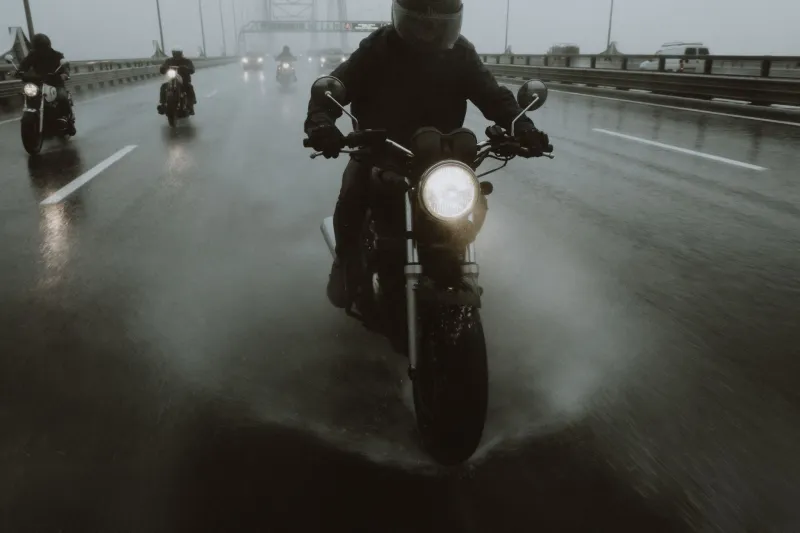
Bandung, Indonesia sits at roughly 2,400 feet above sea level in West Java, and its climate delivers what meteorologists classify as a tropical highland environment: warm temperatures year-round, a pronounced rainy season that runs from roughly October through April, and humidity levels that rarely drop below 70 percent even in the driest months. For a motorcycle, this is not a friendly operating environment. It is a relentless stress test.
The technicians at Honda Motor Bandung service bikes that have been ridden through daily monsoon rains, left standing in saturated air for weeks at a time, and operated on roads that flood, erode, and deposit mineral-rich water into every joint, cable, and bearing surface on the motorcycle. This is not occasional adversity. It is the baseline.
The maintenance instincts that emerge from this environment are not exotic or overly technical. They are disciplined, systematic, and—when applied with the same consistency in American riding conditions—remarkably effective at extending component life and preventing the kind of gradual degradation that eventually becomes an expensive repair.
Understanding Your Own Climate Before You Maintain for It
Before applying any maintenance strategy, American riders benefit from thinking honestly about what their motorcycle actually faces across a full calendar year. The challenges differ significantly by region.
Riders in the Pacific Northwest contend with persistent moisture, mild temperatures, and the kind of low-level corrosion that accumulates quietly over months of wet riding. Riders in the Upper Midwest and Northeast face a compressed but intense challenge: road salt applied from November through March penetrates every exposed surface, and freeze-thaw cycles stress seals and fasteners in ways that dry-climate riders rarely encounter. Riders in the Southeast face high humidity combined with summer heat that accelerates fluid degradation and rubber aging. Desert Southwest riders deal with UV exposure and temperature swings that crack weathered rubber and dry out cable housings.
Bandung's mechanics operate from a principle that translates across all of these scenarios: identify the dominant stress in your environment and build your maintenance schedule around that stress, not around the calendar alone.
The Electrical System Lesson from Monsoon Season
In Bandung's rainy season, electrical failures are among the most common service issues that technicians encounter. Water intrusion into connectors, corroded grounds, and degraded insulation are predictable consequences of sustained exposure to high humidity and direct rainfall. As a result, electrical inspection is built into every service cycle at Honda Motor Bandung—not reserved for when a problem presents itself.
American riders, particularly those in wet-weather regions, should adopt the same proactive posture toward electrical maintenance. After any period of sustained wet riding, inspect the main harness connectors accessible without disassembly for signs of moisture or corrosion. Apply dielectric grease to connector contacts at each service interval. Check the battery terminals for oxidation and verify that the battery hold-down is secure—vibration combined with moisture accelerates terminal corrosion significantly.
This is not complicated work. It takes less than fifteen minutes during a routine service visit. But it is the kind of inspection that most American dealers skip unless a fault code has already appeared, because the problem is not visible until it becomes a failure.
Corrosion Control: The Road Salt Parallel
Indonesian riders in coastal areas and flood-prone regions deal with salt-laden water intrusion that attacks bare metal, cable housings, and brake components with the same aggression that road salt delivers to motorcycles ridden through a midwestern winter. The preventive response developed in Bandung's service bays is directly applicable to American riders in salt-exposure regions.
The core principle is displacement before accumulation. Rather than waiting until corrosion is visible and addressing it reactively, Bandung's technicians apply protective coatings to vulnerable surfaces—frame junctions, cable ends, exposed fasteners, and brake caliper slide pins—before the corrosive agent has had time to establish a hold.
For American riders, this translates into a specific pre-winter protocol. Before the first road salt application of the season in your area, apply a wax-based protective coating to painted surfaces and a dedicated metal protectant to exposed frame and engine components. Grease all pivot points, including brake and clutch lever pivots, footpeg pivots, and side-stand pivot. After any ride where road salt was present, rinse the motorcycle with fresh water—not high-pressure, which can force water into sealed areas, but a gentle flow that removes salt deposits before they dry and begin working.
Post-winter, a thorough inspection of brake hardware is essential. Caliper slide pins on Honda motorcycles can seize in their bores after a single winter of salt exposure if they were not properly lubricated beforehand, resulting in uneven brake wear and reduced stopping performance that develops so gradually the rider may not notice until the condition is severe.
Rubber and Seal Aging: The Humidity Factor
High humidity accelerates rubber aging in ways that low-humidity environments do not. Bandung's technicians replace fork seals, brake hose fittings, and fuel system rubber components on a more aggressive schedule than Honda's base service intervals suggest, because their operating environment demands it.
American riders in humid regions—the Gulf Coast, the Southeast, and the mid-Atlantic—should apply the same logic. Honda's published service intervals are conservative estimates designed to accommodate a wide range of operating conditions. They are not optimized for the specific stress profile of your local environment. If you ride in a region with sustained high humidity and elevated summer temperatures, consider replacing fork seals and brake fluid on a slightly more aggressive schedule than the manual specifies.
Fork oil in particular degrades faster in high-heat, high-humidity conditions. If your front suspension feels softer than it did when the motorcycle was new and no fork seal leak is visible, degraded fork oil may be the cause. This is a service that American riders frequently defer because the symptom is subtle, but Bandung's mechanics treat it as a routine maintenance item rather than a repair.
Building Your Seasonal Maintenance Calendar
Drawing these lessons together into a practical framework, American Honda riders are best served by a maintenance calendar built around three pivot points:
Before your high-stress season begins—whether that is winter salt season, monsoon-equivalent rainy season, or peak summer heat—conduct a full protective preparation service. Address lubrication, inspect electrical connections, apply protective coatings, and verify that rubber components are in acceptable condition.
During your high-stress season—increase inspection frequency for the systems most challenged by your specific conditions. More frequent chain lubrication in wet conditions, more frequent brake inspection in salt conditions, and more frequent air filter inspection in dusty or post-rain conditions.
After your high-stress season ends—conduct a recovery inspection that specifically targets the damage modes most associated with what your motorcycle just experienced. This is the appointment most American riders skip, and it is the one most likely to catch developing problems before they become expensive ones.
The mechanics in Bandung do not wait for a motorcycle to tell them it has a problem. They build their schedules around the certainty that the environment creates stress, that stress creates wear, and that wear caught early is always cheaper than wear discovered late. That philosophy requires no translation.