The Silent Corrosion: How Your American Garage Is Working Against Your Honda Every Single Day
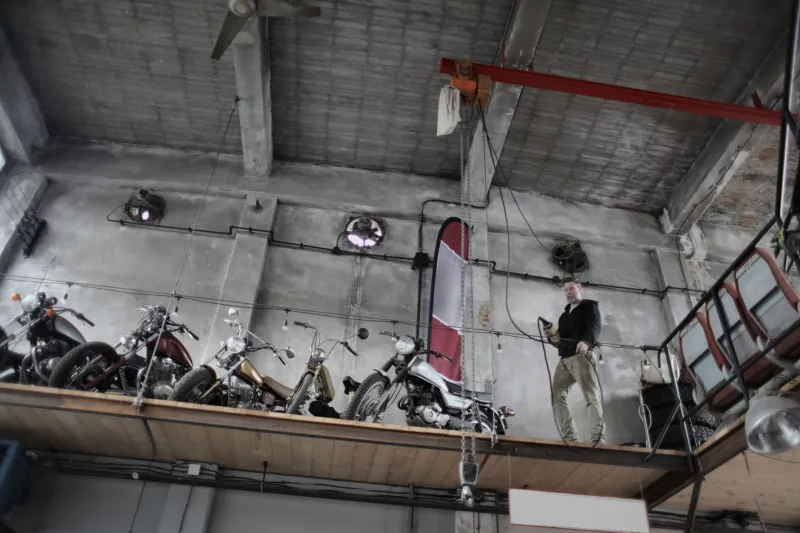
There is a quiet assumption built into American motorcycle ownership: the garage protects the bike. Pull it inside, close the door, and the elements cannot touch it. For riders who park their Hondas through long northern winters or rainy Pacific Northwest seasons, that garage represents peace of mind.
The assumption is understandable. It is also, in important ways, wrong.
What most American riders do not account for is that a closed garage—particularly an unheated, unventilated one—creates its own microclimate. Temperature swings cause condensation. Trapped moisture settles on metal surfaces. Salt tracked in from winter roads lingers in the air and on the floor. The result is an environment that, over months of storage, does measurable damage to a motorcycle that its owner believes is safely resting.
Understanding the Humidity Mechanism
Corrosion does not require rain. It requires only two things: metal and moisture. In a sealed garage, moisture is almost always present. Every time the temperature drops below the dew point—which happens regularly on cold nights in most of the continental United States—water vapor condenses on any cool metal surface it contacts. Your Honda's frame, exhaust system, fasteners, electrical connectors, and brake components are all candidates.
This process repeats nightly through an entire storage season. Each cycle deposits a microscopic layer of oxidation. Individually, those layers are invisible. Cumulatively, after four or five months of storage, they become the rust blemishes, seized bolts, and corroded connectors that greet you when you pull the bike out in spring.
The damage is not dramatic. It rarely causes immediate mechanical failure. But it degrades the motorcycle's condition in ways that compound over years—and that show up unmistakably at resale time.
What Bandung's Climate Teaches About Moisture Management
Bandung, Indonesia sits at roughly 2,400 feet of elevation in a tropical highland climate. Average humidity routinely exceeds 80 percent. Rainfall is frequent and heavy. By any objective measure, it is an environment far more hostile to metal than a Minnesota garage.
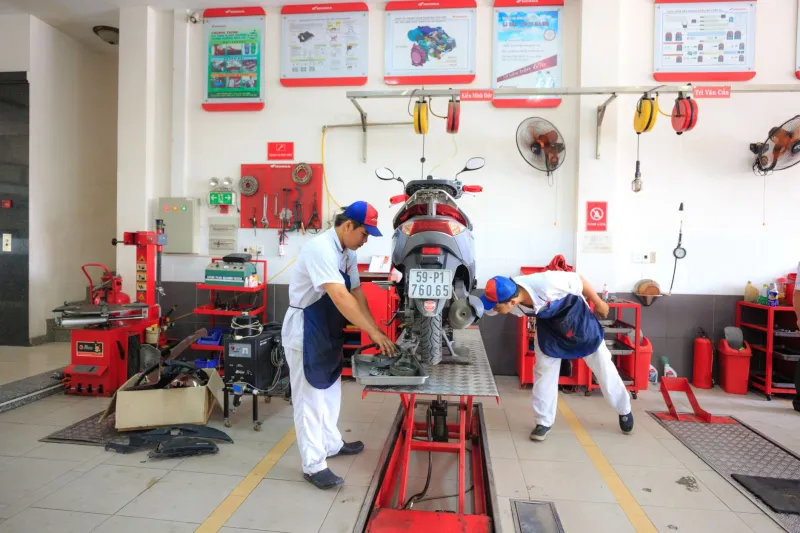
And yet, motorcycles in Bandung—including the high-volume Honda fleet maintained by operations like Honda Motor Bandung—routinely demonstrate exceptional longevity. Bikes that accumulate enormous mileage in genuinely punishing conditions often present better than American motorcycles stored through comparatively mild winters.
The reason is not superior materials or different engineering. It is consistent, deliberate maintenance practice. Bandung's riders and technicians have developed an intimate understanding of what moisture does to motorcycles and have built countermeasures into their standard routines. Those countermeasures translate directly to American storage conditions.
The Pre-Storage Protocol That Makes the Difference
Indonesian Honda owners do not simply park their bikes and walk away. Before any extended period of reduced use—whether due to a holiday, a mechanical repair, or seasonal work demands—a specific preparation sequence is followed.
First, the motorcycle is cleaned thoroughly. Not a quick rinse, but a detailed wash that removes road grime, chain lubricant residue, and any salt or chemical contamination from the surfaces. Moisture clings to contaminants. A clean surface resists it more effectively.
Following the wash, every exposed metal surface receives a light application of protective coating. Corrosion-inhibiting sprays are applied to fasteners, frame joints, and any area where two different metals meet—junctions that are particularly vulnerable to galvanic corrosion. Electrical connectors are treated with dielectric grease. Brake calipers are inspected for moisture intrusion.
The fuel system is also addressed. A full tank leaves less airspace for moisture-laden air to condense inside the fuel cell. A fuel stabilizer is added to prevent oxidation and varnish formation in the carburetor or fuel injection system.
For American owners preparing for winter storage, this protocol requires perhaps two to three hours of focused effort. The protection it provides lasts the entire storage season.
Ventilation: The Variable American Riders Consistently Underestimate
One of the most effective tools against garage humidity is also the simplest: airflow. A sealed garage traps moisture. A garage with even modest ventilation—a small fan running intermittently, a ventilation gap near the floor, a dehumidifier—significantly reduces the moisture load on every surface inside it.
Bandung's open-air storage culture, born of necessity in a climate where enclosed garages are less common, inadvertently produces better outcomes than the sealed American garage. Ambient air movement, even humid tropical air, prevents the stagnant moisture accumulation that a sealed space creates.
American riders with access to electricity can install a small dehumidifier in their garage storage space for a modest upfront investment. Set to maintain relative humidity below 50 percent, it will do more to protect a stored Honda than any cover or coating applied to the bike itself.
Addressing Salt Contamination Specifically
For riders in northern states, salt deserves particular attention. Road salt used for winter ice control is extraordinarily corrosive, and it does not stay on the roads. It becomes airborne, it adheres to vehicles, it is tracked into garages on tires and boots, and it settles on surfaces far from the original road surface.
If your Honda is ridden at all during or immediately after a winter storm—or even if it is simply stored in a garage where a salted vehicle is also parked—salt contamination is a real risk. A thorough wash before storage is not optional in these conditions; it is essential. Pay particular attention to the underside of the frame, the swingarm pivot, the footpeg mounts, and the area around the exhaust headers, where salt accumulation is heaviest and ventilation is poorest.
The Resale Consequence of Storage Neglect
A motorcycle that has been stored correctly for five winters looks fundamentally different from one that has not. The correctly stored bike presents clean, rust-free fasteners, intact electrical connections, and a frame free of the surface oxidation that signals long-term moisture exposure. To an experienced buyer, these details communicate volumes about how the previous owner treated the machine.
The incorrectly stored bike—even if it runs well—carries visible evidence of neglect that buyers use to negotiate aggressively. Surface rust on fasteners, corrosion on the battery terminals, a slightly pitted exhaust header: none of these are catastrophic, but collectively they tell a story that suppresses offers.
The preservation habits that Bandung's riding community developed out of climatic necessity are, for American owners, a choice. Making that choice consistently—season after season—is one of the most straightforward ways to protect both the mechanical integrity and the financial value of your Honda investment.