Spring Repair Bills Are Written in November: A Twelve-Step Storage Protocol for Your Honda
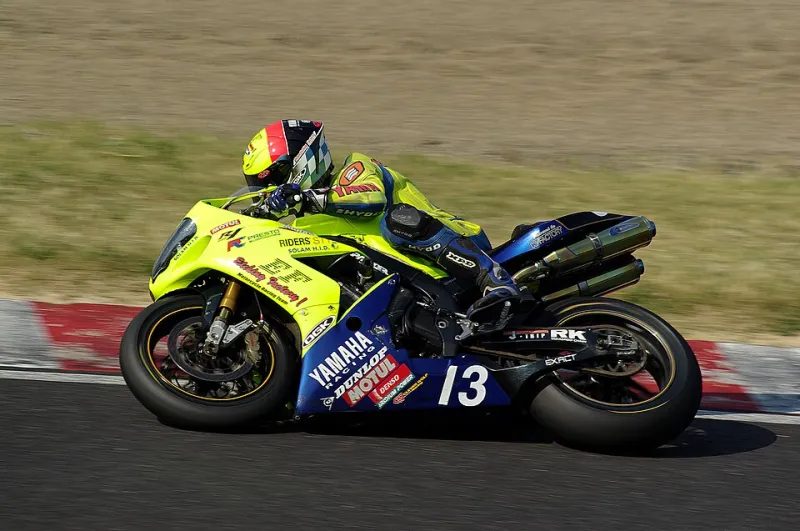
Photo: Laitche, CC BY 3.0, via Wikimedia Commons
In much of the United States, the riding season does not end on a calendar date. It ends on the first morning the thermometer stays below freezing, or on the afternoon the first load of road salt lands on the bridge deck. The motorcycle goes to the back of the garage, the cover goes on, and everyone involved silently agrees to think about it again in March.
That silent agreement is where spring repair bills begin. A clogged injector, a battery that will not hold a charge, fork seals weeping onto the concrete, a brake rotor wearing a band of rust where the pads sat — none of these are spring failures. Each is the predictable result of a storage decision made months earlier, and each costs considerably more to correct than a disciplined afternoon in November would have cost to prevent.
In Bandung, technicians face the opposite climate: humidity above eighty percent, every day of the year, and a corrosion clock that never pauses. The American version of the same problem is the freeze-thaw cycle, which condenses a film of water on cold metal each morning and leaves it there until the sun returns. The mechanism differs. The lesson does not. A machine that sits still is being acted upon by its environment whether or not anyone is watching.
Storage Is Maintenance, Not the Absence of It
Riders tend to file storage under not riding, which is to say, under nothing at all. It belongs under maintenance instead: a short, sequenced job performed once, with a defined end state — a motorcycle that starts in April exactly as it did in October.
Fuel: The Chemistry That Decides Your Spring
Most American pumps now dispense E10, and ethanol is hygroscopic. Over eight to twelve weeks of stillness, untreated fuel oxidizes, darkens, and can phase-separate, leaving a corrosive water-rich layer at the bottom of the tank and varnish in the injectors, the pump, and the lines. The symptoms appear months later as hard starting, a rough idle, and a diagnostic bill.
Three steps solve it. First, add a stabilizer formulated for ethanol blends and dose it exactly per the label. Second, ride the motorcycle for fifteen or twenty minutes so the treated fuel actually reaches the pump, the lines, the injectors, and the combustion chamber — stabilizer poured into a tank that never moves protects only the tank. Third, fill the tank nearly to the top. A half-empty tank is a condensation chamber: every temperature swing pulls moist air in through the vent, and that moisture ends up in the fuel. On carbureted machines, drain the float bowls rather than trusting chemistry to carry the day.
Battery: The Drain Nobody Watches
Lead-acid batteries self-discharge at roughly three to five percent per month, and a modern Honda draws a small parasitic current even with the key off — the clock, the immobilizer, the ECU memory. Add a cold garage, which reduces cranking amps while accelerating sulfation, and a battery that was healthy in October is a paperweight by February.
Remove the battery if the storage space is unheated and keep it indoors at roughly fifty to sixty degrees Fahrenheit on a maintainer matched to its chemistry. A smart charger designed for lead-acid should not be connected to a lithium pack; float voltages differ and the damage is silent until it is permanent. Lithium batteries should also never be charged below freezing. Clean the terminals, apply dielectric grease, and check the electrolyte level on serviceable types before storage rather than after.
Tires, Suspension, and the Weight of Standing Still
A tire that carries the same contact patch for five months develops a flat spot that no amount of riding will fully erase. Inflate to the pressure on the swingarm label, or three to five pounds above it, and lift the weight off the tires with a paddock stand or center stand if the bike has one. If it does not, roll the machine a quarter turn of the wheels every couple of weeks. Do not deflate the tires; that advice belongs to an era of bias-ply construction and accomplishes nothing but rim damage and sidewall cracking.
Forks compressed for an entire off-season are forks whose seals sit in a single position, drying against the stanchion. Back the preload off and let the front end extend.
Mice, Moisture, and the Cover Question
Rodent damage is the most expensive storage mistake American riders make, and it is almost always invisible until the first start. Mice nest in airboxes, chew the foam under seats, and strip insulation from wiring harnesses. Plug the muffler outlet and the airbox intake with coarse steel wool, and tape a note to the handlebar so the spring start does not become a spring retrieval operation.
On moisture: a plastic tarp is the wrong tool. It traps the moisture that rises from the floor and holds it against the paint and chrome. Use a breathable cover on a clean, dry machine, and leave some ventilation in the space. Concrete does not drain batteries, contrary to persistent folklore, but it does hold ground moisture that migrates upward all winter.
The Restart Ritual
Spring starts fail because riders treat them as an ignition event rather than a sequence. Remove the steel wool first. Install a fully charged battery and confirm resting voltage near 12.6 volts before touching the starter. Check tire pressures, oil level, coolant, brake fluid, and chain tension. Turn the key, let the fuel pump prime fully, and start. Idle for two or three minutes while listening, then inspect beneath the machine for drips. Squeeze the front lever and confirm it feels firm, not spongy.
Only then take a short, low-speed loop through the neighborhood, braking gently and progressively to scrub the light surface rust from the rotors. That rust is normal and harmless. A hard panic stop on the first ride of the year, before the pads have re-seated, is neither.
The Twelve Points, in Order
- Wash and thoroughly dry the motorcycle before storage.
- Change the oil and filter so combustion acids do not sit against the bearings all winter.
- Dose the fuel with an ethanol-compatible stabilizer.
- Ride long enough to circulate treated fuel through the entire system.
- Fill the tank nearly full.
- Drain carburetor float bowls where applicable.
- Remove and maintain the battery on a chemistry-appropriate charger.
- Inflate the tires and unload the suspension.
- Lubricate the chain and cables; wipe the fork stanchions.
- Seal the intake and exhaust against rodents and tag the reminder.
- Cover with a breathable cover in a ventilated space.
- Write the restart date on the checklist and keep it with the keys.
Cheaper Than a Diagnosis
The arithmetic is not close. An afternoon, a bottle of stabilizer, and a maintainer cost less than a single hour of diagnostic labor at most American dealerships, and far less than a fuel pump or a battery replacement. Storage is the cheapest maintenance a rider will ever perform, precisely because the alternative is the most expensive kind: the repair that was never necessary.