Where Your Honda Was Serviced Matters More to Buyers Than How Many Miles It Has
When most American Honda owners think about protecting resale value, their mental checklist looks familiar: keep the miles low, avoid accidents, store the bike properly during winter. Mileage, in particular, tends to dominate the conversation. It is the first number a buyer asks for and the first variable a trade-in tool calculates.
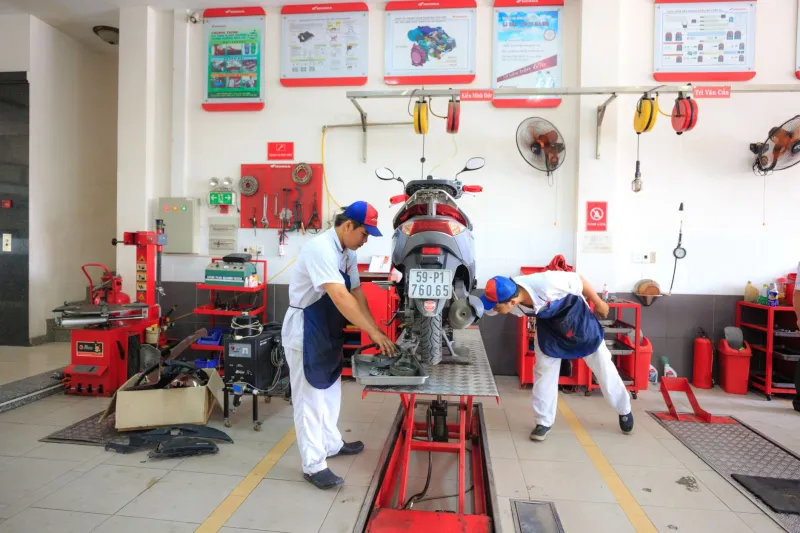
But spend time with professional appraisers, experienced private buyers, or the service advisors at Honda Motor Bandung, and a different picture emerges. The question they ask—one that most American sellers are not prepared to answer—is not "how many miles?" It is "where was it serviced, and by whom?"
The Hidden Variable in Every Honda Appraisal
Resale value is not a single number. It is a confidence score. A buyer is not simply purchasing a machine; they are purchasing a set of assumptions about that machine's future reliability. Mileage is one input into that confidence score, but it is a blunt one. A Honda CB500F with 18,000 miles serviced meticulously at a certified dealer will consistently outperform, in both buyer interest and final sale price, a comparable model with 12,000 miles maintained at an independent shop with no documented credentials.
The reason is straightforward: low mileage tells a buyer what the bike has not done. Service history tells them what has actually been done to it—and who did it.
American buyers, particularly those purchasing used motorcycles in the $4,000–$10,000 range, have grown more sophisticated about this distinction. Online forums, motorcycle-specific valuation tools, and peer communities have educated a generation of riders about the difference between a bike that "looks good" and one with a verifiable maintenance record from a shop they can trust.
Why Shop Reputation Functions as a Price Multiplier
Consider two identical 2020 Honda CB300R listings. Both have 15,000 miles. Both are in the same color. One comes with a folder of receipts from a national chain auto-service shop that also handles oil changes for pickup trucks. The other carries documentation from a dedicated Honda motorcycle dealer with trained technicians and Honda-specific service equipment.
In most markets, the second bike commands a measurable premium—often $300 to $700 higher—before a single negotiation begins. The buyer's logic is not irrational. They understand that a technician who specializes in Honda motorcycles is less likely to have torqued a bolt incorrectly, used an incompatible lubricant, or missed a model-specific service bulletin.
Shop reputation, in other words, functions as a price multiplier. A credible service location amplifies the value of every other positive attribute the bike carries. A questionable one suppresses it, regardless of what the odometer reads.
What Bandung's Service Culture Reveals About Buyer Psychology
At Honda Motor Bandung, located in one of Indonesia's most densely populated urban centers, service volume is extraordinarily high. Technicians there handle dozens of Honda models daily across a wide spectrum of engine sizes, use cases, and road conditions. The documentation culture that emerges from that environment is not incidental—it is structural.
Every service visit generates a timestamped record tied to the vehicle's identification number. Parts used are logged by part number, not just description. Technician notes are retained, not discarded. When a customer in Bandung sells their Honda, the buyer does not have to take anyone's word for the bike's condition. The paper trail speaks independently.
American buyers touring that kind of documentation—even from an overseas dealer—respond with immediate confidence. The specificity signals professionalism. It suggests that the people who worked on the motorcycle knew what they were doing and cared enough to record it. That perception, whether the buyer consciously articulates it or not, directly influences what they are willing to pay.
The "Unfamiliar Shop" Penalty Is Real
American sellers frequently underestimate what appraisers call the "unfamiliar shop" penalty. When a buyer or dealer cannot verify the reputation, credentials, or Honda-specific competency of the shop listed on a service receipt, they discount the value of that record entirely. An unverifiable service history is treated almost identically to no service history at all.
This creates a painful irony: an owner who paid for every scheduled service but used a shop that cannot be independently verified has, from a resale standpoint, gained almost nothing from that investment. The money was spent. The confidence was not transferred.
Conversely, owners who use Honda-certified or Honda-affiliated service centers—whether domestically or internationally—benefit from the institutional credibility those shops carry. Buyers recognize the name. They understand what the certification implies. They do not need to do additional research to trust the record.
Practical Steps American Honda Owners Should Take Now
The implications for American owners are concrete and actionable.
First, prioritize Honda-certified dealers for all scheduled maintenance, even if an independent shop offers a lower per-visit price. The long-term resale premium almost always exceeds the short-term savings.
Second, request itemized documentation after every service visit. Generic receipts that say "oil change and inspection" carry far less buyer confidence than records that list specific fluids, filter part numbers, torque specifications checked, and technician sign-off.
Third, organize service records chronologically before listing a bike for sale. Buyers who receive a disorganized pile of receipts must do interpretive work. Buyers who receive a clean, ordered service file experience the transaction as transparent—and that experience has monetary value.
Finally, consider the long game before choosing where to save money today. The $40 saved by using a discount oil-change chain instead of a certified Honda dealer may cost $400 when the buyer's appraiser looks at the service history and shrugs.
The Credibility Economy of Motorcycle Resale
The motorcycle resale market, like most markets, runs on credibility. Buyers extend premium pricing to sellers they trust, and they extend trust to sellers whose documentation reflects professional, accountable care.
Mileage will always matter. But in a market where buyers have become more informed and more cautious, the question of where a Honda was serviced has moved from footnote to headline. American owners who understand this dynamic—and who make their service decisions accordingly—will consistently recover more of their original investment when it comes time to sell.
At Honda Motor Bandung, that principle is not a marketing message. It is the operational standard that defines every interaction between a technician and a motorcycle. The confidence it creates in buyers is not accidental. It is built, one documented service visit at a time.