Same Part, Wildly Different Price Tag: What Bandung's Honda Supply Chain Reveals About American Dealer Markups
When Travis Kowalski, a Honda CB500F owner from Portland, Oregon, walked into his local dealership asking for a replacement camshaft tensioner, he was quoted $94 for the part alone — labor not included. A few weeks later, while corresponding with a Honda enthusiast forum, he connected with a technician at Honda Motor Bandung who sent him a photograph of the same component sitting on a parts shelf in Bandung, tagged at the equivalent of roughly $28 USD. Same Honda part number. Same manufacturing origin. A price difference of more than 230 percent.
"I thought there had to be a mistake," Travis recalled. "I asked the Bandung technician to double-check the part number, and it matched exactly. That's when I started asking harder questions about where my money was actually going."
Travis's experience is not an anomaly. It is, increasingly, a pattern that American Honda riders are discovering as global communication opens windows into dealership ecosystems they were never meant to see.
How Bandung's Dealer Network Sits Closer to the Source
Indonesia is one of the largest motorcycle markets on the planet. Honda manufactures and distributes an extraordinary volume of motorcycles and components throughout Southeast Asia, with production facilities operating at a scale that dwarfs many Western markets. Dealers in Bandung — a city of more than two million people with a dense, active riding population — operate within a supply ecosystem where Honda parts flow directly and efficiently from regional distribution hubs.
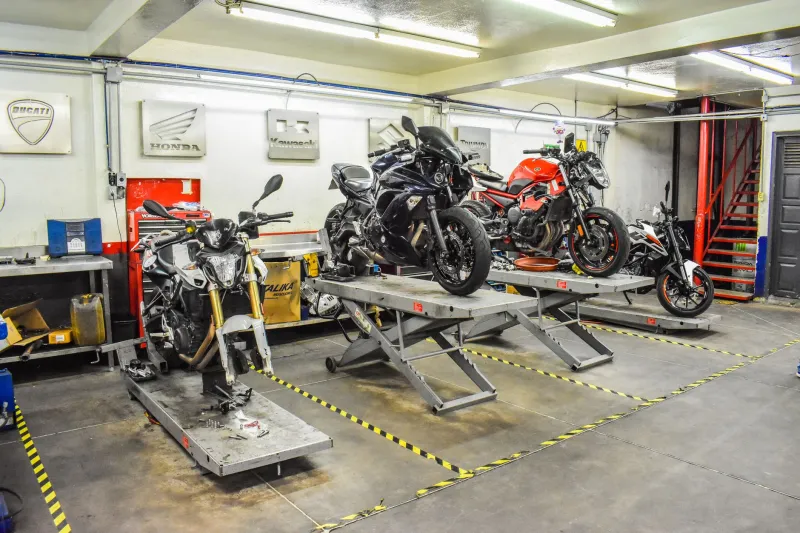
At Honda Motor Bandung, procurement is not a passive process. Senior technicians maintain active relationships with Honda's regional parts distribution network, which means components move from manufacturer to service bay with minimal intermediary markups. When a customer needs a brake caliper seal kit, an air filter housing, or a voltage regulator, the path from Honda's inventory to the customer's motorcycle is short, documented, and cost-efficient.
By contrast, the American dealership model typically involves several layers of distribution — national importers, regional warehouses, and dealer-level inventory management — each adding a margin that the end customer absorbs without necessarily understanding why.
The Markup Architecture Most Riders Never Question
To be clear, American Honda dealerships are not engaged in deceptive pricing. The markups that US riders encounter reflect genuine operational costs: import logistics, warehousing, staffing, compliance requirements, and the relatively lower volume of parts moved per dealership compared to high-density markets like Bandung. The economics are real.
But understanding those economics is precisely the point. When American riders accept a parts quote without context, they are often paying for an infrastructure gap rather than for the intrinsic value of the component itself.
Rachel Dominguez, a Honda NC750X owner from Austin, Texas, learned this distinction after replacing her bike's rear shock absorber linkage bearings. Her dealership charged $67 for the bearing set. A subsequent conversation with a Honda Motor Bandung parts advisor — initiated through an international Honda owners' forum — revealed that the same bearing kit was stocked locally at a cost equivalent to approximately $19 USD.
"It wasn't that my dealer was ripping me off," Rachel explained. "It was that nobody had ever explained to me that the price I was paying was largely a function of geography and supply chain, not the part itself."
What Bandung Technicians Actually Recommend to International Customers
When asked directly, Honda Motor Bandung's senior parts technicians are candid about what they would advise American riders — not to circumvent their local dealers, but to become more informed participants in the transaction.
First, they recommend that riders always request the Honda OEM part number before accepting a quote. Armed with that number, a rider can independently research pricing across multiple authorized channels, including Honda's own parts lookup tools and international dealer networks. Knowledge of the part number transforms a passive customer into an active one.
Second, they suggest that American riders explore Honda's authorized online parts distributors, several of which source inventory through more direct supply arrangements and can offer pricing that undercuts traditional dealership retail by a meaningful margin — while still providing genuine OEM components that preserve warranty coverage.
Third, and perhaps most importantly, Bandung technicians emphasize the value of asking dealerships about price-matching programs or fleet pricing arrangements. High-volume markets have normalized negotiation around parts pricing in ways that American dealerships, accustomed to customers accepting listed prices, sometimes do not proactively offer.
The Warranty Question American Riders Always Ask
The most common concern raised by US Honda owners exploring alternative parts sourcing is warranty integrity. It is a legitimate question, and the answer requires precision.
Genuine Honda OEM parts — regardless of where they are purchased — carry Honda's standard component warranty. The critical variable is authenticity, not geography. A Honda OEM brake pad purchased through an authorized international distributor carries the same manufacturer backing as one purchased at a dealership in Columbus, Ohio.
The risk arises with counterfeit components, which are a genuine concern in some international markets. This is precisely why Honda Motor Bandung and reputable dealers across Southeast Asia emphasize authorized supply chains. Every component sourced through Honda's official distribution network carries documentation confirming its origin — documentation that matters both for warranty purposes and for the long-term reliability of the motorcycle.
American riders who pursue international sourcing should insist on this documentation as a non-negotiable condition of purchase. Any seller unwilling to provide it should be treated with appropriate skepticism.
A Different Relationship With Parts and Pricing
What strikes many American riders who engage with Bandung's Honda community is not just the price differential — it is the underlying philosophy. In a market where motorcycles are primary transportation rather than recreational vehicles, parts pricing is taken seriously as a quality-of-life issue. Riders in Bandung are not hobbyists budgeting for an occasional tune-up; they are daily commuters for whom maintenance cost is a practical, recurring concern.
That orientation produces a culture of parts literacy that most American riders simply have not needed to develop. When your motorcycle is how you get to work, you learn what components cost, where they come from, and how to ask better questions of the people servicing your bike.
American Honda owners are increasingly borrowing that mindset. Forums, international rider communities, and direct communication with dealers like Honda Motor Bandung are slowly dismantling the information asymmetry that has long characterized the US parts market.
The Practical Takeaway
None of this is an argument against American Honda dealerships. Local service relationships carry genuine value — convenience, accountability, and the peace of mind that comes from dealing with a known entity. What it is an argument for is informed participation.
Know your part numbers. Understand the supply chain you are buying into. Ask questions about pricing origins rather than accepting the first quote as a fixed reality. And recognize that somewhere in Bandung, a technician is sourcing the same component you need — efficiently, affordably, and without compromising an ounce of Honda's engineering integrity.
The part is the same. The price does not have to be.