Forged in High Volume: The Technical Edge That Bandung's Honda Technicians Carry Into Every Service Bay
There is a concept in professional development known as deliberate practice — the idea that genuine expertise is not simply a function of time spent, but of the intensity, variety, and feedback quality of the experience accumulated. By that standard, a Honda motorcycle technician working in Bandung, Indonesia, operates in one of the most demanding and skill-accelerating environments in the world. Understanding why that matters for American riders requires a closer look at what daily life inside a Bandung service bay actually involves.
Volume as a Teacher
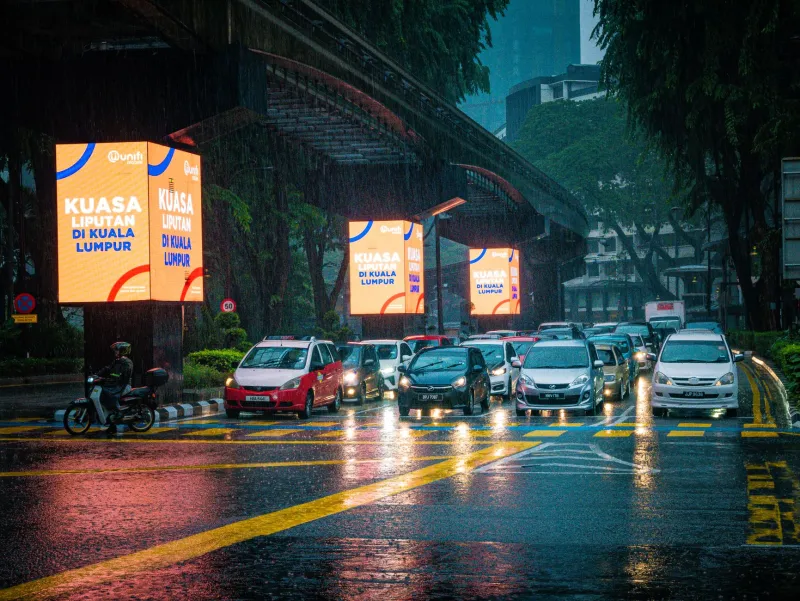
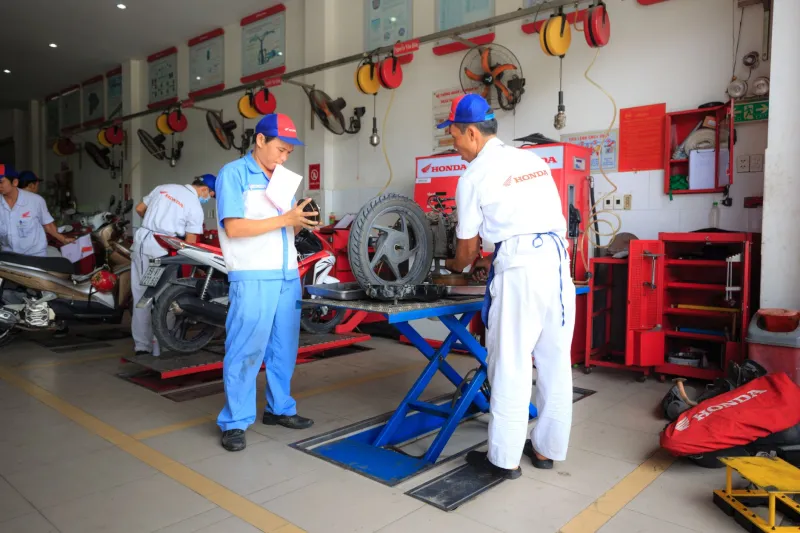
In the United States, a busy motorcycle dealership service department might process several dozen bikes in a given week. In Bandung — a city where motorcycles are not recreational accessories but primary daily transportation for millions of residents — a well-staffed Honda service center can process that same volume in a single day. The sheer number of machines moving through the service bays creates a learning environment that simply cannot be replicated in lower-volume settings.
Repetition, in technical trades, is not monotony — it is calibration. A technician who has performed a valve adjustment on a Honda CB150 three hundred times develops a tactile and auditory sensitivity to that procedure that no training manual can fully convey. They know what correct feels like, and they know what wrong sounds like, before diagnostic tools confirm either. This embodied knowledge — built through volume — is one of the most significant differentiators that Bandung technicians carry.
At Honda Motor Bandung, that volume-driven expertise is not an accident. It is a structural feature of operating in one of the world's most motorcycle-dense markets, and it shapes every technician on the team from their earliest days in the service bay.
Training That Begins Before the Wrench
Honda's authorized dealership network in Indonesia follows a structured technical training curriculum administered through Honda's regional training programs. New technicians do not begin unsupervised work immediately. They progress through a tiered certification system that covers fundamental mechanical principles, Honda-specific service procedures, and diagnostic methodology before they are cleared to work independently on customer vehicles.
What distinguishes this training in the Indonesian context is the speed at which theoretical learning is reinforced by real-world application. Because service volume is so high, a newly certified technician in Bandung will encounter the full range of common failure modes and service scenarios within their first several months — a breadth of experience that might take years to accumulate in a lower-volume American dealership environment.
Senior technicians at Honda Motor Bandung serve as active mentors within the service bay, not simply supervisors. When an unusual fault presents itself — an intermittent electrical issue, a noise that does not match any standard diagnostic pathway — the response is collaborative. Multiple technicians examine the problem together, share observations, and build toward a solution. This culture of shared problem-solving accelerates individual learning and produces more reliable diagnostic outcomes.
The Tropical Conditions Advantage
Bandung's climate, while more temperate than coastal Indonesian cities, still subjects motorcycles to conditions that stress components in ways American riding seasons rarely replicate consistently. Heat cycling, humidity, rain exposure, and the vibration demands of urban stop-and-go riding on varied road surfaces create a comprehensive mechanical stress test that runs year-round.
For technicians, this means that preventive failure modes — the kinds of issues that develop slowly and are easy to miss in a routine service — become visible and recognizable much earlier in their careers. A Bandung technician learns to inspect rubber seals, electrical connections, and corrosion-prone fasteners with a thoroughness that reflects genuine experience with what happens when those items are neglected under real-world stress.
American riders who bring their bikes to Honda Motor Bandung — or who consult with the dealership's technical team remotely — benefit from this preventive orientation. The recommendations they receive are not generic service interval reminders; they are specific, condition-aware observations rooted in a technician's direct experience with failure consequences.
Diagnostic Methodology: Systematic Over Speculative
One pattern that emerges consistently in conversations with Honda Motor Bandung's technical staff is a commitment to systematic diagnosis before component replacement. In some service environments — domestic and international alike — the response to an ambiguous fault code or an unclear symptom is to replace the most likely component and observe the result. This approach is expensive for the customer and does not always resolve the underlying issue.
Bandung technicians, shaped by a market where customers are price-sensitive and repeat business depends on genuine resolution, have developed a more disciplined diagnostic methodology. They work through fault trees methodically, testing assumptions before acting on them. They ask detailed questions about riding conditions, maintenance history, and symptom onset. They treat the diagnostic phase as genuinely important — not as a formality to be rushed through on the way to a parts sale.
For American riders consulting with Honda Motor Bandung about a persistent issue, this approach manifests as a conversation rather than a quick verdict. The technician wants to understand the full picture before offering a recommendation, and that thoroughness pays dividends in the accuracy of the guidance provided.
What Longevity Looks Like in Practice
The practical outcome of this training environment, diagnostic discipline, and preventive orientation is measurable. Riders who maintain regular contact with Honda Motor Bandung's technical team — using it as a resource for service guidance, parts verification, and troubleshooting support — consistently report extended service intervals without unexpected failures, reduced long-term maintenance costs, and a clearer understanding of their own motorcycles' condition.
This is not magic. It is the predictable result of accessing expertise that has been built under demanding conditions and refined through genuine volume. A technician who has seen a particular failure mode fifty times knows how to prevent it, how to catch it early, and how to explain it to an owner in terms that are both accurate and actionable.
For American Honda riders who are accustomed to treating their dealership as a service provider of last resort, the experience of engaging with Honda Motor Bandung's technical team offers a different model: proactive, relationship-oriented, and grounded in a depth of expertise that the riding conditions and service volumes of Bandung have made genuinely exceptional.