No Off-Season: What Indonesian Riders Know About Staying Connected to Your Honda All Year Long
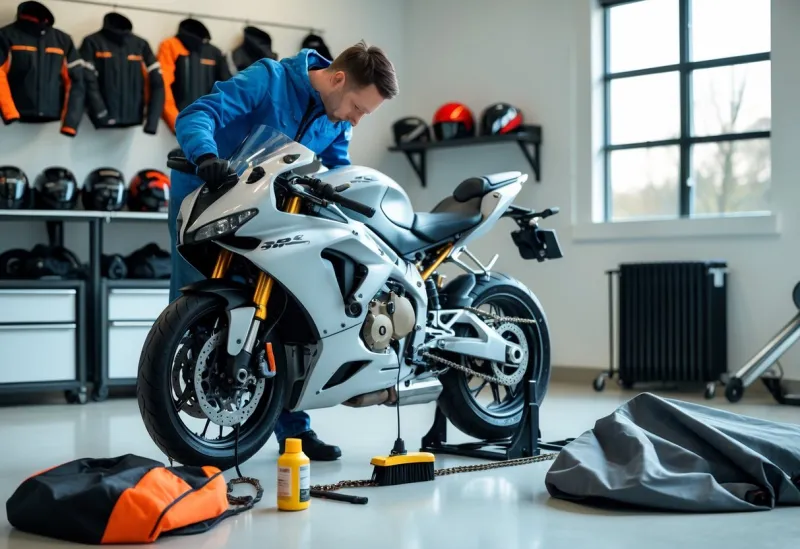
Somewhere in a garage in suburban Ohio, a Honda CB300R sits under a cover from November through March. Its tires have lost a few PSI. The chain has developed a faint orange tinge where the lubricant has thinned. The owner, a perfectly capable rider, checks on it occasionally, runs a hand over the tank, and tells himself that spring will come soon enough.
This scene repeats itself across the northern United States every year. Millions of motorcycles go dormant while their owners wait for conditions to improve. It is a deeply American pattern—and it is one that Indonesian riders would find genuinely puzzling.
A Culture Built on Continuous Motion
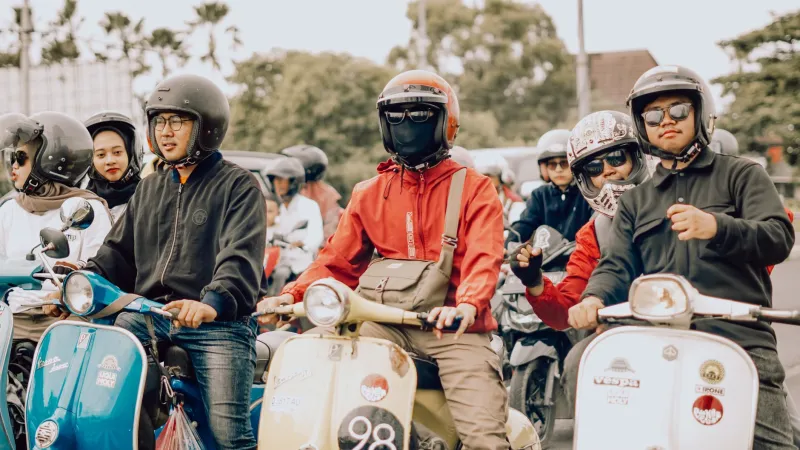
In Bandung, and across Indonesia broadly, the motorcycle is not a seasonal accessory. It is infrastructure. The country's road networks, urban density, and economic realities have made the motorcycle the most practical form of daily transportation for an enormous portion of the population. When the monsoon season arrives and sheets of warm rain transform city streets into slow-moving rivers, riders do not retreat—they adapt.
This is not a matter of recklessness or necessity overriding good judgment. It is the product of a riding culture that has developed over decades, one in which the relationship between rider and machine is maintained continuously rather than interrupted by calendar seasons. The skills, the instincts, and the mechanical awareness that come from year-round riding are simply unavailable to someone who parks the bike for four months and picks it back up when the weather turns pleasant.
For American Honda owners, that gap in experience represents a real limitation—not just in skill, but in the depth of the connection they are able to build with their motorcycles.
Rituals That Keep Indonesian Riders Road-Ready
One of the most striking aspects of Indonesian riding culture is the role of routine. Before a morning commute in Bandung, a practiced rider does not simply turn the key and roll out. There is a brief but deliberate check: tire pressure by feel and eye, a glance at the chain, a listen to the engine as it warms. These are not formal inspection procedures—they are habits so ingrained that they happen almost unconsciously.
This level of tactile familiarity with the machine is one of the most significant advantages that year-round riders carry. When something changes—a subtle vibration, a slightly softer brake feel, an idle that runs a touch rough after a cold start—they notice immediately because they have an uninterrupted baseline of comparison. The rider who stored the bike in October and retrieved it in April has no such baseline. Every small anomaly requires interpretation from scratch.
American Honda owners who want to develop this same awareness do not need to ride in blizzards. They need to ride consistently enough that the machine's normal behavior becomes second nature. Even short, careful rides during mild winter days accomplish more than months of storage when it comes to maintaining that rider-machine relationship.
Mindset Over Meteorology
The shift from fair-weather rider to year-round enthusiast is, at its core, a mindset adjustment rather than a gear acquisition. Indonesian riders do not wait for perfect conditions because they have learned that perfect conditions are rare and that waiting for them means missing most of the year. Instead, they develop an honest assessment of what conditions are genuinely dangerous and what conditions are simply uncomfortable.
Uncomfortable is manageable. A cold morning in the mid-40s with dry pavement is uncomfortable. It is not dangerous, provided the rider is dressed appropriately and has adjusted their expectations for braking distances and tire warm-up time. The American tendency to treat discomfort as a reason to stay home is one of the primary reasons so many capable riders never develop the confidence or the mechanical intuition that comes from consistent saddle time.
This is not a criticism—it is an observation about what is being left on the table. The riders who push through the uncomfortable seasons consistently report a deeper satisfaction with their motorcycles, a stronger sense of skill, and a more meaningful relationship with the riding experience overall.
Community as an Accountability Structure
In Indonesia, riding is rarely a solitary pursuit. Community groups, neighborhood riding clubs, and informal networks of commuters create a social fabric around motorcycle culture that provides both motivation and accountability. When your neighbors ride to the market in the rain, the psychological barrier to doing so yourself drops considerably. Community normalizes behavior that might otherwise feel extreme.
American Honda riders have access to similar communities, though they may require more intentional effort to find and maintain. Regional Honda owners' groups, online forums, and organized winter riding clubs exist across the country. Riders in the Pacific Northwest, where wet winters are simply part of the landscape, have developed particularly robust communities around all-weather riding that reflect some of the same cultural norms found in Indonesia.
Seeking out those communities—or building them—changes the experience of off-season riding from a personal discipline exercise into a shared endeavor. That social dimension makes consistency far easier to maintain and transforms what might feel like an eccentric individual habit into a recognized and respected part of local riding culture.
What the Bike Needs When You Keep Riding
Continuous riding does require a corresponding commitment to continuous maintenance. Honda Motor Bandung's service philosophy is built on exactly this premise: a motorcycle that is ridden regularly in varied conditions needs attention that reflects that reality. Chain lubrication intervals shorten in wet conditions. Brake pads wear differently in cold weather. Tire compounds behave in ways that demand more frequent pressure checks when temperatures fluctuate significantly.
For American riders who extend their riding seasons, the maintenance calendar should extend accordingly. This is not a burden—it is the natural reciprocal obligation of a relationship with a machine that is asked to perform year-round. Riders who embrace this obligation tend to find that they become more knowledgeable about their Hondas, more capable of identifying issues before they escalate, and more confident in their ability to manage the machine in a range of conditions.
The Indonesian riding culture's emphasis on continuous, attentive maintenance is not separate from its emphasis on continuous riding. The two are inseparable, and together they produce riders and machines that are more capable, more reliable, and more deeply connected than their fair-weather counterparts.
Reclaiming the Forgotten Months
The months that American riders most commonly write off—November, December, January, February—are not uniformly hostile to motorcycling across the entire country. In large portions of the South, the Southwest, and along the Pacific Coast, those months are entirely rideable with appropriate preparation. Even in harsher climates, there are windows of opportunity that disciplined riders learn to recognize and use.
Reclaiming those months does not require heroism. It requires a modest investment in appropriate gear, a willingness to adjust riding style for the conditions, a commitment to more frequent maintenance checks, and the kind of community connection that makes the effort feel worthwhile rather than eccentric.
Indonesian riders figured this out not through philosophy but through necessity. American Honda owners have the opportunity to arrive at the same place through choice—which, arguably, makes it even more rewarding.
The bike is in the garage. The road is outside. The season, if you decide it is, is now.