The Long Ride Philosophy: How Indonesian Honda Owners Treat Their Bikes—And Why It's Changing American Riders' Minds
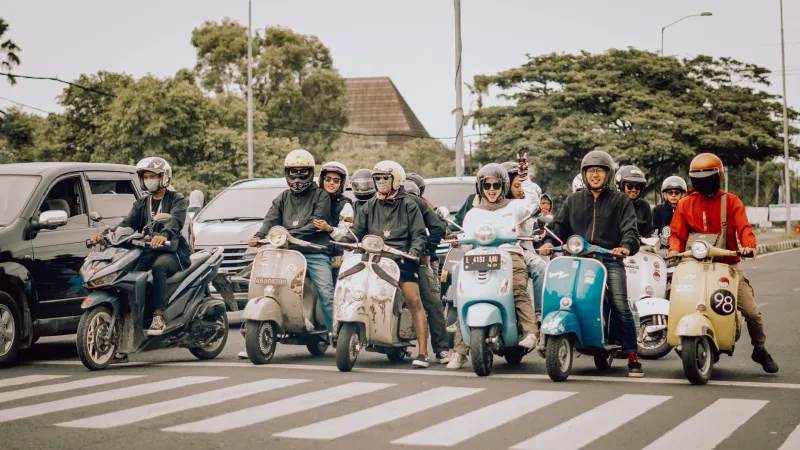
American consumer culture has a complicated relationship with longevity. We admire things built to last, but we also live in a marketplace that rewards replacement over repair, novelty over familiarity. Motorcycles are not immune to this dynamic. Trade-in cycles shorten. New models arrive with persuasive marketing. The idea of riding the same Honda for fifteen or twenty years strikes many US riders as either admirably eccentric or simply impractical.
In Bandung, Indonesia, it is neither. It is simply normal.
At Honda Motor Bandung, we interact daily with customers whose relationship with their motorcycles spans decades rather than years. Bikes that have crossed the 100,000-kilometer threshold are serviced with the same care as those fresh from the showroom. The philosophy underlying this behavior is not nostalgia or frugality alone—it is a deeply held belief that a well-maintained motorcycle is a partner, not a product.
American Honda riders who have encountered this perspective describe it as quietly transformative.
Ownership as Investment, Not Consumption
Marcus D., a Honda CB500F owner based in Portland, Oregon, first encountered Indonesian riding culture through a series of YouTube documentaries on Southeast Asian motorcycle travel. What struck him was not the volume of bikes on Bandung's streets, but the condition of older machines still in active daily use.
"I saw a Honda Vario that had to be at least ten years old, and it looked genuinely well-kept," he said. "Not restored—maintained. There's a difference. That got me thinking about how I was treating my own bike."
Marcus's observation points to a distinction that Indonesian riders understand intuitively: maintenance and restoration are not the same investment. Consistent, scheduled maintenance keeps a motorcycle from ever needing restoration in the first place. It requires discipline and a willingness to spend small amounts regularly rather than large amounts reactively. For riders accustomed to deferring service until a problem becomes impossible to ignore, this represents a meaningful shift in mindset.
The Ritual of Regular Service
In Indonesian motorcycle culture, the service visit is not an interruption to riding life. It is part of riding life. Owners in Bandung often develop personal relationships with specific technicians, returning to the same service advisor visit after visit, building a shared history with both the mechanic and the machine.
This continuity matters more than it might initially appear. A technician who has serviced the same Honda CB150R for five years carries contextual knowledge that no diagnostic tool can replicate. He knows that the bike tends to run slightly hot in heavy traffic. He remembers that the rear brake cable was replaced eighteen months ago and should be monitored. He has watched the engine evolve through thousands of kilometers and can detect subtle deviations from its established baseline.
For American riders accustomed to rotating through whoever is available at the service desk, this kind of longitudinal familiarity sounds almost luxurious. But it is achievable. It simply requires choosing consistency over convenience—returning to the same shop, requesting the same technician when possible, and building the kind of ongoing relationship that transforms routine maintenance into genuine mechanical stewardship.
Community as Accountability
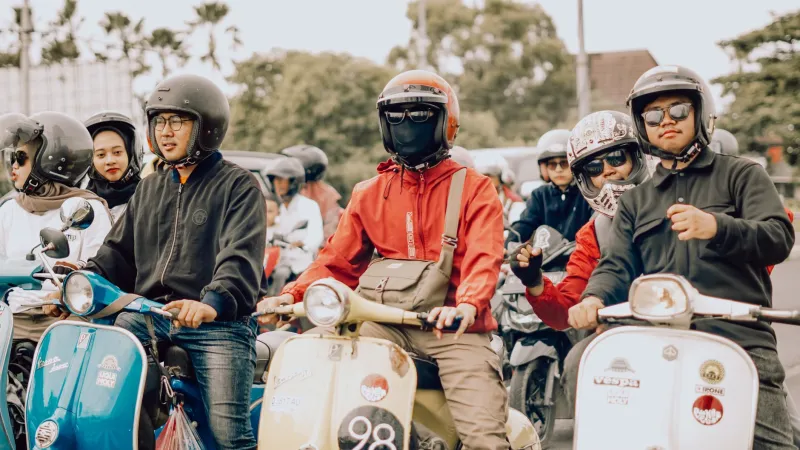
Another dimension of Indonesian motorcycle ownership that American riders are beginning to appreciate is the role of community in sustaining good maintenance habits. Riding groups in Bandung do not exist solely for weekend excursions. They serve as informal accountability networks, where members notice when a fellow rider's chain is under-lubricated, when tire wear looks uneven, or when a brake light has been out for two consecutive rides.
This peer-level attention to mechanical condition is not intrusive—it is collegial. It reflects a shared understanding that a well-maintained bike is a safer bike, and that safety on the road is a communal concern, not a purely individual one.
Jennifer L., a Honda NC750X rider from Austin, Texas, joined an online community with strong Indonesian membership after searching for CB series maintenance tips. "They were incredibly specific about service intervals in ways I hadn't seen in US forums," she explained. "Not just 'change your oil every 3,000 miles,' but why you change it at that interval, what you're protecting against, what the signs of neglect look like. It changed how I read my owner's manual."
Longevity as a Riding Philosophy
There is a practical argument for the Indonesian approach to Honda ownership, and there is also an emotional one. The practical argument is straightforward: consistent maintenance reduces total cost of ownership, extends machine life, and preserves resale value. These outcomes are measurable and well-documented.
The emotional argument is harder to quantify but equally compelling. A motorcycle that has been carefully maintained over many years accumulates something that a newer machine cannot offer: history. The CB500 that has carried its owner through ten thousand miles of American highways, regular service visits, and the occasional long weekend adventure is not just transportation. It is a record of a riding life.
Indonesian Honda owners understand this intuitively. The bike is not a vehicle to be replaced when the next model year arrives. It is a relationship to be sustained, deepened, and honored through the discipline of proper care.
A Counterpoint Worth Considering
Not every American rider will find this philosophy immediately appealing. The US market is built on choice, and the freedom to upgrade, trade in, or start fresh is part of the riding culture here. There is nothing inherently wrong with embracing new technology or responding to changing needs with a different motorcycle.
But the Indonesian ownership model offers something worth considering even for riders who will eventually move on to a new bike: the habits formed through meticulous care—regular service, detailed record-keeping, community engagement, mechanical curiosity—make every motorcycle better, regardless of how long you keep it.
At Honda Motor Bandung, we believe that the relationship between a rider and a motorcycle is one of the most rewarding in the automotive world. The riders in Bandung who have sustained that relationship for decades are not outliers. They are examples. And a growing number of American Honda owners are beginning to follow their lead.