One Missed Oil Change, One Ruined Engine: The Costly Chain Reaction Bandung's Technicians See Every Week
There is a common assumption among motorcycle owners—particularly those who ride infrequently or keep their bikes in good cosmetic condition—that skipping an oil change here and there is a manageable risk. The engine looks fine. The bike runs. Nothing sounds alarming. What could one delayed service interval really cost?
At Honda Motor Bandung, we see the answer to that question on a near-daily basis. And it is rarely a small number.
Bandung's riding environment is unforgiving. Dense urban traffic, steep hill climbs, persistent humidity, and year-round riding schedules push Honda engines to their limits in ways that expose every maintenance shortcut with brutal efficiency. When a motorcycle arrives at our service bay with a neglected lubrication history, the damage is rarely isolated. It spreads—quietly, methodically, and expensively.
Understanding that process is not just relevant to Indonesian riders. American Honda owners, operating under very different conditions but the same mechanical principles, stand to learn a great deal from what our technicians encounter week after week.
What Oil Actually Does—And What Happens When It Degrades
Engine oil is not simply a lubricant. It is a multi-function fluid that simultaneously reduces friction between moving components, carries heat away from critical surfaces, suspends microscopic metal particles and combustion byproducts, and maintains a protective film under extreme pressure. When oil is fresh and at proper viscosity, it performs all of these functions in concert.
As oil ages, its molecular structure breaks down. Viscosity drops. The additive package—which includes detergents, dispersants, and anti-wear compounds—becomes depleted. What remains in the crankcase is a degraded fluid that can no longer adequately protect the engine's internal surfaces.
In Bandung's climate, this degradation accelerates. High ambient temperatures combined with stop-and-go traffic cause oil to cycle through thermal stress repeatedly within a single ride. A Honda that might comfortably reach a 3,000-mile oil change interval under mild American suburban conditions may require servicing considerably sooner when subjected to tropical urban riding.
The principle, however, transfers directly: oil that has exceeded its service life is not neutral. It is actively harmful.
The Cascade Begins: How One Neglected Service Becomes Five Repairs
Our service records at Honda Motor Bandung document a pattern that repeats with remarkable consistency. A customer arrives with a high-mileage bike exhibiting a specific complaint—unusual engine noise, reduced power output, or excessive fuel consumption. Upon inspection, the oil is dark, viscous beyond acceptable limits, and often critically low due to consumption caused by worn seals.
What follows is not a single repair. It is a cascade.
In one representative case from our service center, a Honda CB150R arrived with approximately 28,000 kilometers on the odometer and a maintenance history that showed oil changes performed at intervals nearly twice the recommended schedule. The customer's presenting complaint was a persistent knocking sound at operating temperature.
Diagnosis revealed the following: worn piston rings allowing oil to enter the combustion chamber, scoring on the cylinder wall from inadequate lubrication, degraded camshaft bearing surfaces, and early-stage sludge deposits restricting oil flow through the engine's internal passages. What began as a single overdue oil change had, over time, produced damage requiring a partial engine rebuild.
The total repair cost exceeded fifteen times the price of the oil changes that would have prevented it.
This is not an isolated case. It is a template.
The Sludge Problem American Riders Underestimate
One of the most insidious consequences of extended oil change intervals is the formation of engine sludge—a thick, gel-like deposit that accumulates in oil passages, valve train components, and the oil pan. Sludge does not announce itself. It builds gradually, restricting oil flow and starving components of lubrication precisely when they need it most: during cold starts and high-load operation.
American riders who experience cold winters and store their bikes seasonally face a particular sludge risk. When a motorcycle sits for months with degraded oil in the crankcase, that oil continues to oxidize and thicken. The first start of spring pushes that compromised fluid through an engine whose components are already tight from cold temperatures—a combination that accelerates wear significantly.
Bandung's year-round riding culture means our technicians rarely deal with storage-related sludge, but we do encounter it in bikes whose owners have stretched service intervals across wet seasons when riding frequency drops. The damage profile is identical regardless of geography.
Comparing the Numbers: Preventive Maintenance vs. Reactive Repair
Let us be direct about the economics, because they are the most persuasive argument for timely oil changes.
A standard oil and filter service for a Honda motorcycle at Honda Motor Bandung—using genuine Honda oil and OEM filter components—represents a modest, predictable expense. Performed on schedule, it is one of the lowest-cost maintenance items in a motorcycle's service life.
Contrast that with the repair costs associated with neglect-driven damage:
- Piston ring replacement due to oil blow-by from lubrication failure: substantially more than a year's worth of timely oil changes.
- Cylinder boring or re-sleeving due to scoring from metal-on-metal contact: a cost that can approach or exceed the market value of an older motorcycle.
- Camshaft and bearing replacement due to accelerated wear from degraded oil: a labor-intensive procedure that compounds parts costs significantly.
- Full engine rebuild in cases of advanced neglect: a financial outcome that often makes replacement the more rational choice.
American Honda owners should apply these cost comparisons directly to their own situations. Labor rates differ between Bandung and the United States, but the mechanical relationships do not. The damage caused by neglected lubrication is universal.
Why Bandung Technicians Treat Oil Changes with Unusual Seriousness
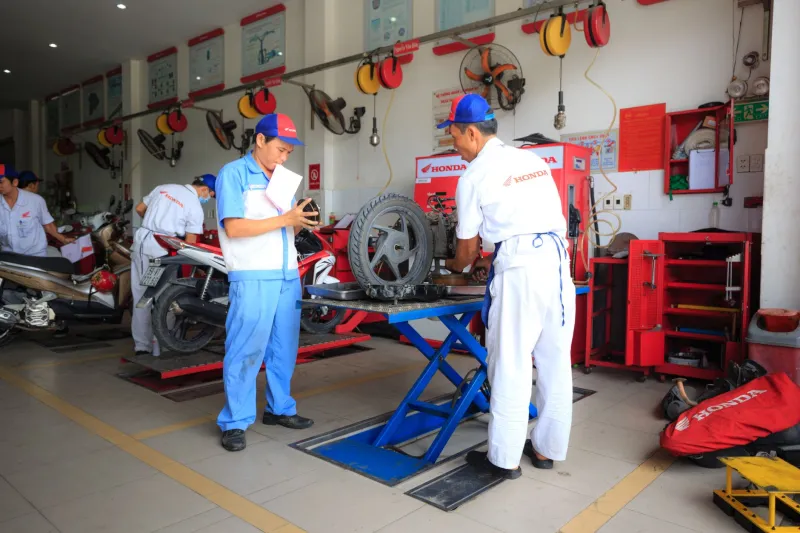
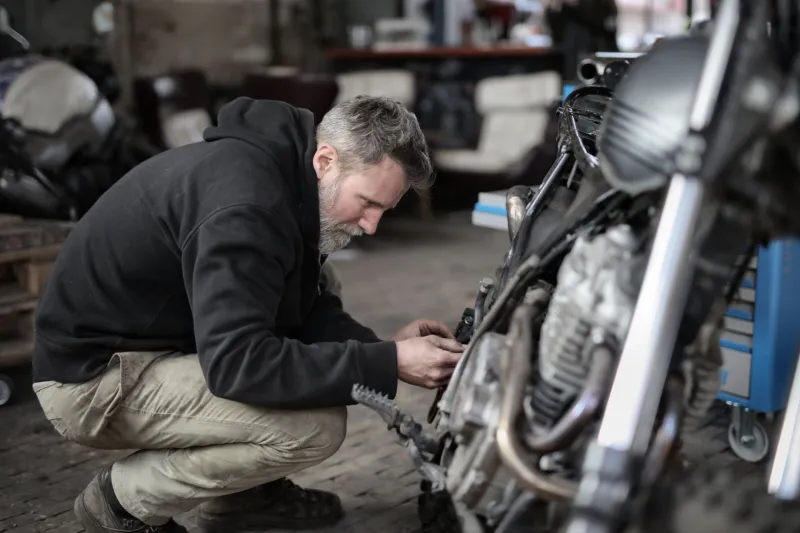
At Honda Motor Bandung, an oil change is not treated as a routine task to be dispatched quickly. It is treated as a diagnostic opportunity. Our technicians examine the drained oil for color, consistency, and the presence of metal particles or coolant contamination. The filter is inspected. Oil consumption between intervals is noted and tracked against the vehicle's service history.
This approach transforms a simple fluid replacement into a window into the engine's overall health. Anomalies caught during an oil change—unusual metal content, milky discoloration suggesting coolant intrusion, or consumption rates that have changed since the last service—allow intervention before minor issues become major failures.
This is the surgical mindset referenced in our service culture. Not because an oil change is technically complex, but because it is treated with the attention and intention that the engine's long-term health genuinely warrants.
American riders who work with dealerships that rush through oil changes without documentation, fluid analysis, or consumption tracking are missing the diagnostic value that makes preventive maintenance truly preventive.
What You Can Do Right Now
If you are uncertain when your Honda last received a proper oil and filter service, that uncertainty itself is a warning sign worth acting on. Check your owner's manual for the manufacturer's recommended interval, factor in your riding conditions—frequent short trips, extreme heat, heavy traffic, and high-load riding all shorten effective oil life—and schedule service accordingly.
If you have recently purchased a used Honda without a complete service history, consider an oil change and inspection as your first investment in the bike, regardless of where the odometer stands.
The cost of a timely oil change is fixed and predictable. The cost of the damage it prevents is not.
At Honda Motor Bandung, we have seen both outcomes. The difference between them is not luck or mechanical fortune. It is simply maintenance performed on time, with genuine attention to what the engine is telling you.
Your Honda was built to last. Give it the foundation to do so.