The Test Ride Is Not a Formality: A Used-Honda Route That Reveals What the Seller Won't

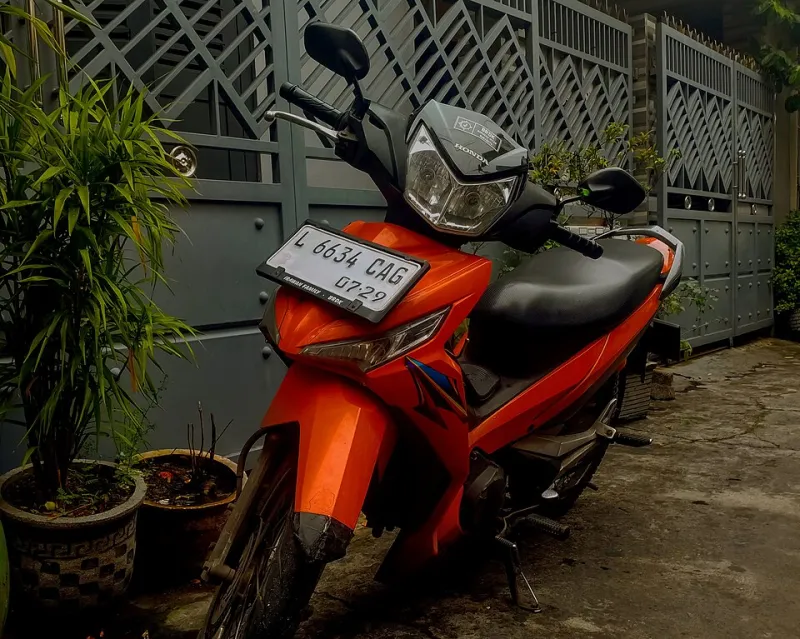
Photo: Basile Morin, CC BY-SA 4.0, via Wikimedia Commons
A used Honda can look honest in a driveway and still hide a problem that only appears when the engine is hot. That is why the test ride matters. In the United States, buyers often treat it as a formality: a short loop through the neighborhood, a few shifts, a nod, and a handshake. In Bandung, dealers tend to treat the same twenty minutes as a diagnostic tool. The route is not dramatic. It is repeatable. That repeatability is what makes it useful.
A Twenty-Minute Route, Not a Parking Lot Loop
The purpose of a used-Honda test ride is not to confirm that the motorcycle moves. It is to create conditions in which hidden faults become visible. A cold start reveals one set of problems. Low-speed maneuvering reveals another. Ten minutes of heat soak reveals a third. A buyer who only rides around the block may never reach the temperature or the speed where those problems show themselves.
A good route should be legal, short enough that a private seller will agree to it, and varied enough to include a cold start, slow turns, steady-speed running, acceleration, braking, and a return to idle. The route used by many Bandung dealers follows that sequence. American buyers can adapt the same logic to their own roads, whether they are buying from a dealership lot or a private seller on Facebook Marketplace.
Before the Engine Is Warm
Ask the seller not to warm the engine before you arrive. A cold start is one of the most informative moments in a used-motorcycle purchase. Listen for unusual ticking, a long crank, rough fast idle, or smoke that does not clear. Check that the neutral light, oil pressure light, and any ABS or engine warning lights behave as they should. If the seller has already warmed the bike, ask to let it cool and restart it later in the inspection.
Before riding, check the tires, chain or belt, brake fluid level, and controls. Look under the engine for fresh stains. Sit on the bike and compress the suspension. Turn the bars from lock to lock and listen for cable or bearing noise. These checks are not a substitute for a professional inspection, but they tell you whether the test ride is worth continuing.
The First Five Minutes: Low-Speed Balance and Steering
Begin in a parking lot or quiet street. Make slow figure eights and full-lock turns. A used Honda should feel balanced at walking pace. A steering head bearing that is too tight or too loose will show up here. So will a dragging front brake, a binding throttle, or a clutch that engages too abruptly.
Test the clutch in the friction zone. The bike should pull away smoothly, without shudder or a delayed engagement. Apply the front brake gently at low speed and feel for pulsation or a spongy lever. A firm lever that does not travel toward the grip is a good sign; a lever that sinks slowly may indicate air in the system or a failing master cylinder.
Listen at low speed for chain noise, wheel bearing rumble, or a clicking sound that changes with wheel rotation. These are not always expensive problems, but they are negotiating points. A seller who refuses a slow-speed test in a safe area is telling you something before the ride begins.
The Middle Ten Minutes: Heat Soak and Load
Move to a road where you can accelerate through the gears at legal speeds. Use the full rev range only as far as road conditions and the owner's manual allow. A used bike should pull cleanly without hesitation, surging, or a flat spot. Hold a steady speed in the middle gears and listen for exhaust leaks, cam chain noise, or transmission whine that changes under load.
After about ten minutes, the engine and exhaust will be fully hot. This is when heat-related faults often appear. An ignition coil that breaks down when warm may cause a miss. A fuel pump that is losing pressure may cause a stumble under acceleration. A clutch that is beginning to slip may reveal itself only when the engine is hot and the throttle is opened in a higher gear.
Watch the temperature gauge or warning light. Let the bike idle for a minute after the ride and listen for the cooling fan. Check for coolant weeping at the water pump and oil mist around the head gasket. A hot engine can expose a leak that was invisible when cold.
The Final Five Minutes: Brake Repeatability and Cool-Down
Repeat a few controlled stops from moderate speed. The brake lever should feel consistent, not progressively softer. The bike should stop straight without pulling to one side. After the stops, inspect the rotors for heavy scoring or blue heat marks. A warped rotor may not be obvious at low speed, but it will often pulse through the lever after repeated use.
Return to the starting point and let the bike idle. Look underneath again. Check the fork tubes for an oil ring, the engine cases for fresh drips, and the coolant hoses for swelling. Restart the engine while it is hot. A bike that cranks slowly when warm may have a battery, starter, or charging problem that a cold start will not reveal.
What the Route Is Designed to Expose
The protocol is not perfect, and it is not a substitute for a pre-purchase inspection by a qualified technician. It is a filter. It exposes cold-start faults, low-speed handling problems, brake defects, heat-soak symptoms, and the noises that only appear after ten minutes of riding. Those are precisely the issues that a short test ride tends to miss.
At Honda Motor Bandung, the service center sees the other side of this equation: buyers who purchased a motorcycle after a brief ride and then discovered a leaking fork seal, a failing regulator, or a clutch that slipped only when hot. A twenty-minute route would not have guaranteed a perfect purchase, but it would have made the problem visible before money changed hands.
For American buyers, the lesson is simple. Do not treat the test ride as a formality. Treat it as a structured inspection with a beginning, a middle, and an end. Ask the seller for twenty minutes, follow a repeatable route, and write down what you notice. The motorcycle will tell you more in that time than a polished listing ever can.