What American Honda Riders Are Actually Paying For: The Hidden Premium Built Into Every OEM Part Order
When a Honda rider in the United States orders a genuine OEM brake pad set, a replacement air filter, or a fuel pump assembly, the invoice reflects more than just the part. It reflects ocean freight, domestic distribution margins, regional dealer markups, and a retail infrastructure built around low volume and high overhead. By the time a component moves from Honda's manufacturing ecosystem in Southeast Asia to a dealership counter in Ohio or California, its price may have doubled—or more.
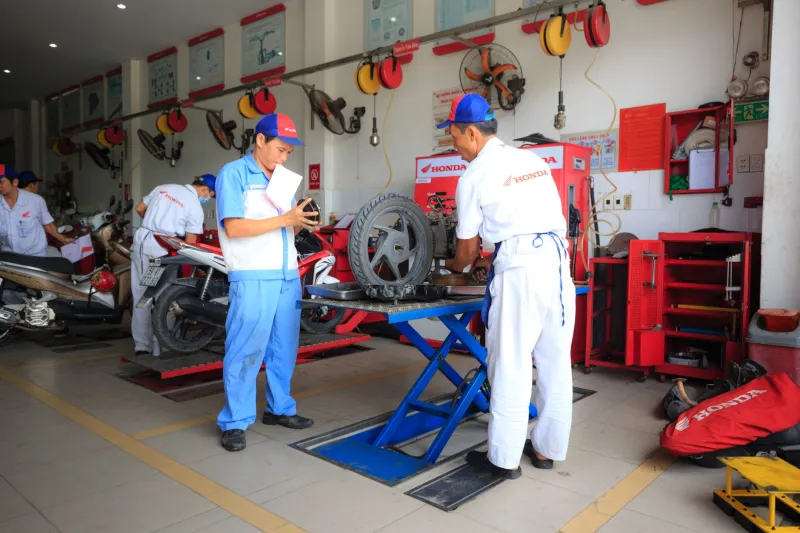
In Bandung, Indonesia, that same component moves through a dramatically shorter chain. Honda Motor Bandung operates within a market where genuine Honda parts are abundant, competitively priced, and sourced through distribution networks that exist in close proximity to the factories that produce them. The result is a pricing reality that American riders rarely encounter—and one that raises a reasonable question: is there a smarter way to source the parts your Honda actually needs?
Understanding Why the Price Gap Exists
The United States Honda parts market is not designed for volume the way Indonesia's is. In Indonesia, motorcycles are the dominant form of personal transportation. Tens of millions of Honda units are in active service, which means the parts distribution infrastructure is built around massive, consistent demand. Distributors compete, dealers stock deeply, and prices reflect that competition.
In the US, Honda motorcycles occupy a recreational and commuter niche rather than a transportation necessity. The dealer network is smaller, inventory turnover is slower, and overhead costs per unit sold are considerably higher. Those costs are recovered through markup. A dealer in suburban America may sell dozens of brake pad sets per year; a dealership in Bandung may move that same quantity in a single week. Scale changes everything about pricing.
Beyond volume, there is the matter of logistics. Honda's manufacturing operations in Indonesia produce components that serve both domestic demand and regional export. American distributors purchase through Honda's North American supply chain, which adds layers of warehousing, compliance processing, and domestic freight before a part ever reaches a service counter.
Which Parts Are Worth Sourcing Internationally
Not every Honda component justifies the effort of international sourcing. The calculus involves part cost, shipping weight, customs exposure, and the urgency of the repair. However, several categories consistently offer meaningful savings when sourced through Indonesian channels.
Filters and consumables — Air filters, oil filters, and fuel filters are lightweight, durable, and non-urgent. These are ideal candidates for bulk international orders. The per-unit price in the Bandung market can be 40 to 60 percent lower than US retail, and shipping a dozen units costs little more than shipping one.
Electrical components — Switches, sensors, and relay assemblies tend to carry significant markup in the US market because demand is irregular and dealer stocking is inconsistent. Sourcing these through a reputable Indonesian dealer—who maintains deep inventory on Honda electrical components—can yield substantial savings, particularly for older or less common models.
Body panels and trim — Fairings, mirrors, and cosmetic components are often priced aggressively in the US due to low turnover. Indonesian dealers who stock these regularly can offer competitive pricing, though shipping costs for larger panels require careful calculation.
Engine internals for non-urgent repairs — If your Honda is not your daily commuter and a rebuild is planned rather than emergency-driven, sourcing pistons, gaskets, and valve components internationally is a legitimate strategy. The lead time is acceptable when the timeline is flexible.
What to Leave to Local Sourcing
Some components simply do not justify the international route. Tires, for instance, are expensive to ship and subject to size and speed rating specifications that vary by market. Batteries present similar challenges—they are heavy, subject to hazardous materials shipping restrictions, and available competitively through US retailers. Fluids, lubricants, and brake fluid are regulated as hazardous goods and are not practical for international shipment.
For any repair that is time-sensitive, local sourcing will almost always be the right call. The three-to-four-week lead time on international orders is a real cost when your motorcycle is grounded and you rely on it.
Navigating Customs and Import Considerations
Importing motorcycle parts into the United States is legal and relatively straightforward for personal use quantities. Most genuine Honda OEM components fall under harmonized tariff codes that carry modest duty rates—typically in the range of two to four percent of declared value. The practical customs cost on a $200 parts order is minimal.
The more significant consideration is the choice of shipping method. Standard international postal services can be slow and tracking is inconsistent. Established courier services such as DHL, FedEx International, or UPS provide tracking, customs pre-clearance support, and reliable delivery timelines. The added shipping cost is usually offset by the part savings, particularly on orders above $100.
Buyers should request a commercial invoice that accurately describes the contents and their value. Misrepresentation of goods to reduce customs duties is a legal risk that no legitimate transaction should involve. Reputable Indonesian Honda dealers understand export documentation and will provide accurate paperwork.
How to Identify a Trustworthy Source
The Indonesian Honda parts market includes authorized dealers operating under Honda's official network as well as independent resellers of varying reliability. For American buyers, the distinction matters. Authorized dealers—such as those operating under Honda's resmi (official) dealer framework—are accountable to Honda's quality standards and are less likely to substitute counterfeit components.
When evaluating a source, look for dealers who can provide the Honda part number alongside the component, who offer clear photos of the actual part and its packaging, and who have documented experience shipping to international customers. Communication response time and clarity are also meaningful indicators of operational professionalism.
Honda Motor Bandung maintains relationships with the broader Honda dealer community in West Java and can speak to the sourcing practices that separate reliable supply from uncertain gray-market alternatives.
The Broader Lesson About Parts and Value
The price American Honda riders pay for OEM components is not a fixed law of nature. It is the outcome of a particular supply chain structure—one that can be partially circumvented by informed riders who are willing to plan ahead and invest modest effort in international sourcing.
Bandung's dealership environment offers a window into what Honda parts pricing looks like when volume, proximity, and competition are all working in the buyer's favor. The gap between what an American rider pays at a domestic counter and what a Bandung rider pays for the identical component is not a quality difference. It is a distribution difference—and that distinction is worth understanding.
For riders maintaining their Honda over the long term, particularly those with older models where US dealer inventory is thin, building a relationship with a reputable Indonesian source is not an exotic strategy. It is practical ownership.