The Sound of Precision: What Bandung's Mechanics Hear in Your Honda That American Shops Often Overlook
There is a particular moment every experienced rider knows well: you pick up your motorcycle after a service appointment, twist the throttle gently, and something feels slightly off. The idle sounds different. There is a faint vibration where there was none before. Or perhaps the engine is quieter than expected—so quiet, in fact, that you are not entirely sure whether the change represents progress or a problem waiting to surface.
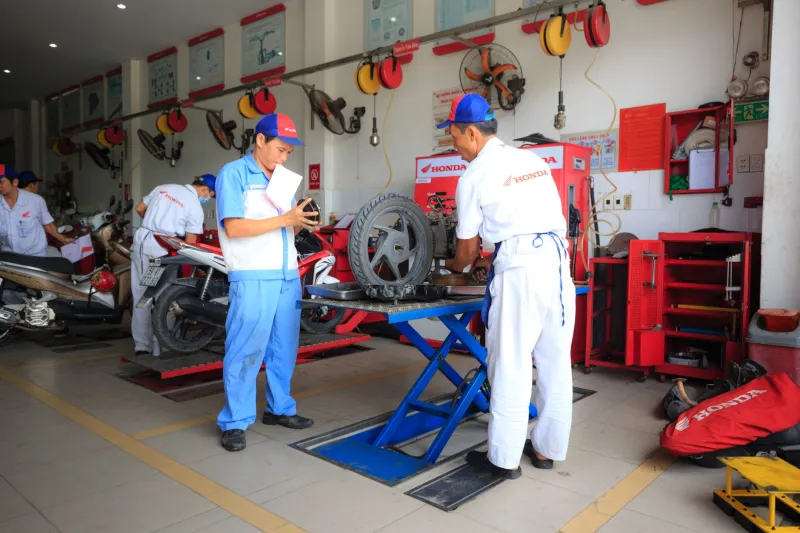
Engine acoustics are one of the most underappreciated dimensions of motorcycle maintenance. At Honda Motor Bandung, where technicians process a volume of Honda motorcycles that would be considered extraordinary by American dealership standards, the ability to read a machine through sound and vibration is not a supplementary skill—it is a foundational one. Understanding what Bandung's mechanics have learned in that environment can fundamentally change the way American Honda owners interpret what their bikes are telling them.
Why Engine Noise Changes After Service—And Why That Matters
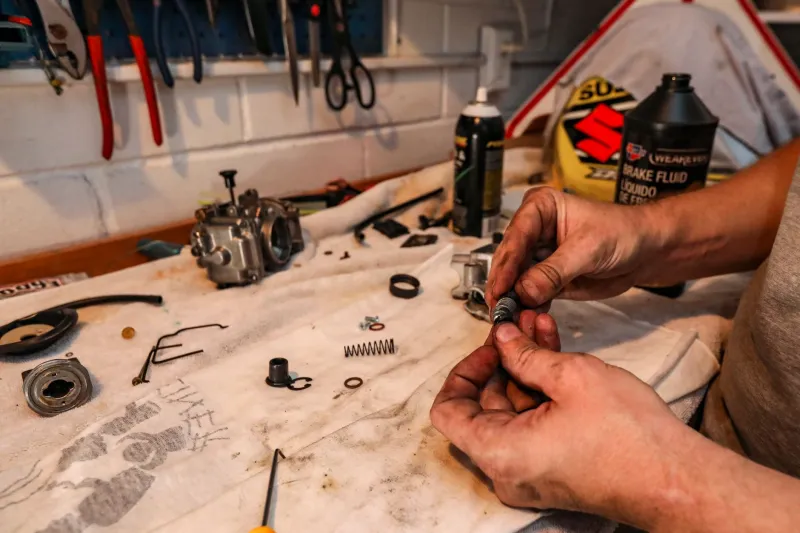
A motorcycle engine is an acoustically complex system. Valves, pistons, camshafts, and the fuel delivery mechanism all contribute to the composite sound a rider hears at idle and under load. When a technician adjusts valve clearances, replaces a worn cam chain tensioner, installs a new air filter, or flushes and refills engine oil with a different viscosity grade, the acoustic signature of the engine shifts. Sometimes that shift is subtle. Sometimes it is pronounced.
The critical question is not whether the sound changed, but whether it changed in the right direction.
A properly executed valve adjustment, for instance, should reduce the characteristic ticking that develops as clearances widen with wear. If your Honda sounds quieter and smoother at idle after that service, the technician has done their job correctly. Conversely, if the ticking has intensified, or if a new mechanical knock has appeared that was not present before, those are acoustic red flags that warrant immediate follow-up.
In Bandung, where motorcycles are the dominant form of urban transportation and dealerships service dozens of units daily, technicians develop an almost reflexive sensitivity to these distinctions. The sheer repetition of working on Honda engines across every model and mileage range trains the ear in ways that no formal curriculum fully replicates.
The High-Volume Advantage: How Repetition Builds Diagnostic Precision
American motorcycle dealerships operate in a market where cars dominate and motorcycles represent a comparatively small service volume. A busy US Honda dealer might complete ten to fifteen motorcycle service appointments on a productive day. In a city like Bandung, where two-wheeled vehicles account for the majority of road traffic, that figure can multiply several times over.
This difference in throughput has a direct effect on diagnostic capability. When a technician has serviced the same Honda engine configuration hundreds of times across a single year, the baseline acoustic profile of that engine becomes deeply internalized. Deviations—a slightly hollow knock at mid-throttle, an irregular vibration frequency at a specific RPM range, a hesitation in throttle response that suggests incomplete combustion—register almost instinctively rather than requiring deliberate analysis.
At Honda Motor Bandung, this institutional knowledge is part of what distinguishes a thorough service from a merely adequate one. Technicians are trained not only to complete prescribed maintenance tasks but to listen actively throughout the process, comparing the engine's behavior before and after each intervention. That comparative listening is where problems are caught before they escalate.
Acoustic Signatures American Riders Should Know
Whether you ride a Honda CB500F in Chicago or a Rebel 1100 in Phoenix, certain acoustic signals carry consistent diagnostic meaning. Familiarizing yourself with these patterns allows you to have more informed conversations with your service provider and to recognize when a post-service change demands closer attention.
Valve Train Ticking: A steady, rhythmic ticking at idle that correlates with engine speed is almost always valve-related. Some ticking is normal and falls within Honda's specified clearance tolerances. Ticking that intensifies after a service—particularly a valve adjustment—suggests the clearances may have been set incorrectly and should be rechecked.
Cam Chain Noise: A rattling or slapping sound from the upper engine, most noticeable at cold start, often points to cam chain or tensioner wear. If this sound appears or worsens after an oil change, it may indicate that the oil viscosity selected does not match Honda's specification for your specific engine.
Throttle Body and Fueling Acoustics: On fuel-injected Honda models, a rough or stumbling idle after a service that involved the throttle body, fuel injectors, or air intake system can indicate an incomplete synchronization or a vacuum leak introduced during reassembly. A properly serviced fuel system should produce a smooth, even idle with a clean, linear response to throttle input.
Exhaust Note Changes: While exhaust sound is influenced by many variables, a change in exhaust tone after routine maintenance—particularly if accompanied by reduced power—can sometimes point to an exhaust gasket that was disturbed and not properly reseated during the service process.
What to Do When Something Sounds Wrong
If your Honda sounds or feels different after a service appointment in a way that concerns you, the appropriate response is documentation and direct communication—not assumption.
Record a short audio or video clip of the engine at idle and under light load before returning to the dealership. This gives the technician a concrete reference point rather than requiring them to rely solely on your verbal description. Note the specific RPM range or riding condition in which the anomaly is most apparent.
A reputable service center will welcome this kind of detailed feedback. At Honda Motor Bandung, post-service follow-up is treated as a natural extension of the service relationship, not an inconvenience. If the acoustic change represents a genuine oversight, a professional technician will acknowledge it and correct it without hesitation.
If, on the other hand, the technician can explain the acoustic change in terms that align with the service work performed—and can demonstrate that the engine is operating within Honda's specified parameters—that explanation itself is valuable. It deepens your understanding of your own motorcycle and builds the kind of informed trust that distinguishes a long-term service relationship from a series of disconnected transactions.
Listening as a Maintenance Habit
The broader lesson that Bandung's service culture offers American Honda owners is this: your ears are a legitimate diagnostic instrument. Riders who pay attention to how their motorcycle sounds and feels under normal conditions are significantly better positioned to notice when something changes—and to act on that change before it becomes expensive.
Make it a habit to take a brief, attentive ride immediately after every service appointment. Pay attention to idle quality, throttle response, vibration at highway speeds, and any sounds that seem new or unfamiliar. This is not paranoia; it is the kind of engaged ownership that keeps Honda motorcycles running well for decades.
The mechanics in Bandung learned to hear engines clearly because their environment demanded it. American riders have the opportunity to develop that same attentiveness—not through volume, but through intention.