Preventive Care, Premium Price: How Bandung's Maintenance Philosophy Is Costing American Honda Owners Real Money at Resale

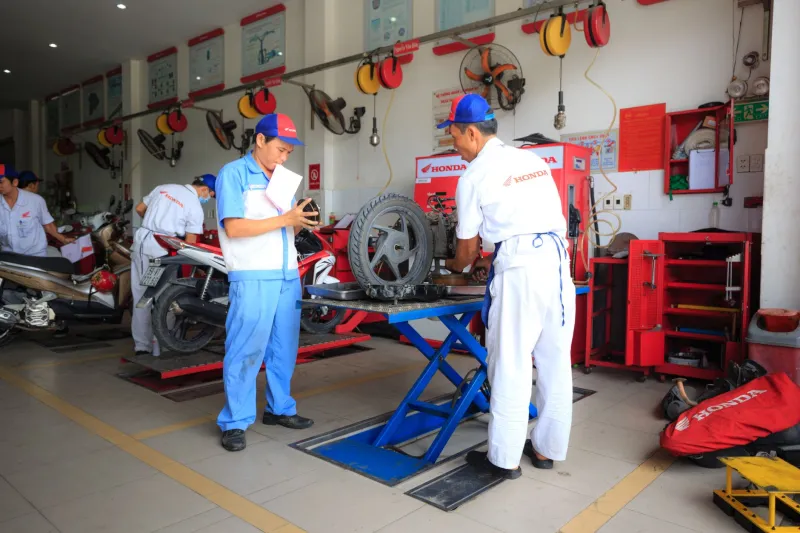
Photo: motorcycle mechanic performing preventive maintenance service on Honda motorcycle in professional dealership shop, via get.pxhere.com
There is a quiet financial leak happening in garages across the United States, and most Honda motorcycle owners have no idea it exists. It does not announce itself with a warning light or an unusual sound. It accumulates gradually, over months and years, in the form of deferred maintenance, skipped service intervals, and the deeply embedded American assumption that a motorcycle only needs attention when something goes wrong.
In Bandung, Indonesia—a city where Honda motorcycles are not weekend luxuries but essential daily transportation—riders and technicians have built an entirely different philosophy around ownership. And the financial results, particularly at resale, are measurable, consistent, and worth examining closely.
The Reactive Trap Most American Riders Don't Know They're In
The reactive maintenance mindset is understandable. American riders often log far fewer annual miles than their Indonesian counterparts, and a motorcycle that runs without obvious symptoms can feel like a motorcycle that requires no attention. Why spend money on a service visit when nothing seems broken?
The answer lies in what happens beneath the surface. Valve clearances drift outside specification quietly. Drive chains stretch and wear sprocket teeth without producing dramatic noise. Coolant degrades its corrosion inhibitors invisibly. Brake fluid absorbs moisture over time, reducing its boiling point long before any pedal feel changes noticeably. None of these conditions announce themselves dramatically—but all of them compound.
By the time an American owner decides to sell a Honda that has been maintained reactively, a prospective buyer or dealership appraiser can identify the cumulative evidence almost immediately. Worn rubber, slightly pitted brake rotors, chain slack that sits at the outer edge of tolerance, and a service history that shows gaps of eighteen months or more between visits tell a story that directly suppresses the offer price.
What Bandung Riders Understand About Ownership Cost
In Bandung, a Honda motorcycle represents a significant financial commitment relative to average household income. That reality creates a culture of attentiveness that American owners, for whom a motorcycle is often a discretionary purchase, rarely develop organically.
Bandung riders track their service intervals not because a dealership reminds them, but because they understand that a well-maintained Honda holds its value in a competitive used market. They bring motorcycles in for minor adjustments—idle mixture, throttle cable free play, air filter inspection—at intervals that many American riders would consider excessive. They document everything, including fluid top-offs and minor consumable replacements, because they know that documentation has monetary value at the point of sale.
This is not obsessive behavior. It is financially rational behavior, calibrated to a market where buyers actively inspect service records and where a gap in documentation is understood as a risk premium that reduces the acceptable purchase price.
The Numbers Behind the Philosophy
Consider the lifecycle cost comparison between two identical Honda motorcycles—same model year, same mileage, same color. The first has been maintained reactively: oil changes performed when the owner remembered, no documented valve adjustment, chain replaced once after it began skipping, and no record of coolant or brake fluid service. The second has followed a Bandung-style preventive schedule: oil changes at manufacturer-specified intervals, documented valve clearance checks, chain and sprocket replaced as a set at the appropriate mileage marker, and fluid services completed on schedule with receipts retained.
In the US used motorcycle market, the gap between these two machines at the point of private sale can range from several hundred to several thousand dollars, depending on the model and total mileage. That spread is not arbitrary. It reflects the buyer's calculation of risk. A motorcycle with a demonstrable preventive maintenance history requires less due diligence and carries lower post-purchase uncertainty. Buyers pay for that certainty.
Furthermore, the owner of the well-maintained motorcycle has typically spent less in aggregate on reactive repairs. Catching a worn cam chain tensioner during a routine valve inspection costs a fraction of what it costs to address the damage caused by allowing that tensioner to fail. Preventive maintenance is not an additional expense layered on top of normal ownership costs—it frequently replaces larger, less predictable costs that reactive owners absorb without connecting them to their earlier inaction.
The Documentation Dividend
One of the most transferable lessons from Bandung's maintenance culture is the discipline of documentation. In Bandung dealerships and independent shops alike, service records are treated as an asset, not an administrative formality. Technicians note not just what was replaced, but what was inspected and found acceptable. This creates a continuous narrative of the motorcycle's mechanical health that a future buyer can read with confidence.
American Honda owners who adopt this standard—retaining all receipts, requesting itemized service write-ups, and maintaining a consistent log of every fluid change and inspection—can meaningfully differentiate their motorcycle in a crowded used market. A buyer comparing two otherwise similar machines will almost always pay more for the one that comes with a coherent service history, because that history converts an unknown into a known.
The practical steps are simple. Keep a dedicated folder, physical or digital, for all service documentation. Request written confirmation of every procedure performed, even minor ones. Note the odometer reading at each service. If you perform any maintenance yourself, document it with the same formality you would expect from a professional shop.
Applying the Blueprint Before the Next Service Interval
For American Honda owners who have been operating reactively, the path forward does not require starting over. It requires a reset.
Begin with a comprehensive inspection at a qualified Honda service center. Have the technician assess the current condition of all major systems—valve clearances, chain wear, brake fluid moisture content, coolant condition, and tire age. Use that inspection report as a baseline, and from that point forward, adhere to the manufacturer's recommended service intervals with the consistency that Bandung riders apply as a matter of course.
The cost of that reset inspection is recoverable many times over at resale. A motorcycle that enters the used market with a documented service history starting from a known baseline, followed by consistent preventive care, commands buyer confidence in a way that no amount of detailing or cosmetic preparation can replicate.
A Different Way of Thinking About What You Own
At Honda Motor Bandung, we observe daily what a culture of preventive care produces: motorcycles that retain mechanical integrity across high mileage, owners who face fewer unexpected repair costs, and used market transactions that reflect the genuine value of attentive ownership.
The American market is not structurally different. The same Honda engineering that responds to preventive care in Bandung responds identically in Boston or Denver or Portland. What differs is the habit, the expectation, and the awareness that maintenance is not a cost to be minimized but an investment to be made deliberately.
The resale value gap between reactive and preventive owners is not a myth. It is a measurable, consistent outcome of two different ownership philosophies. The choice of which side of that gap to occupy belongs entirely to the rider.