Authenticated Across the Pacific: How a Bandung Service Record Is Becoming the Most Powerful Document in the American Used Honda Market

There is a particular kind of confidence that comes with knowing exactly what has been done to a motorcycle—every oil change, every valve adjustment, every filter replacement, logged and verified by a professional technician. In the United States, that confidence has historically been difficult to achieve. Service records get lost. Stickers fade. Previous owners forget, embellish, or simply guess. But a quiet shift is underway, and it is originating thousands of miles from American soil.
At Honda Motor Bandung, we have observed a steady increase in inquiries from American Honda owners—and, more specifically, from American Honda sellers—who are reaching out to Indonesian dealerships to verify or contextualize maintenance claims attached to their motorcycles. The pattern is striking, and the implications for the U.S. used motorcycle market are significant.
The Documentation Problem That American Sellers Know All Too Well
Anyone who has attempted to sell a used motorcycle in the United States understands the frustration of the documentation conversation. Buyers ask pointed questions. They want receipts. They want dates. They want proof that the machine they are considering has been maintained with discipline rather than neglect dressed up in fresh wax and a cleaned air filter.
The American service ecosystem, while capable, is fragmented. Independent shops operate on paper logs or localized digital systems. Dealer records are rarely transferable in a meaningful way. A motorcycle that has changed hands twice in five years may carry three different maintenance narratives, none of them complete, all of them partially credible.
This gap between what sellers claim and what buyers can verify has created a discount culture in the used Honda market. Without verifiable documentation, buyers apply risk premiums—they assume the worst and offer accordingly. Sellers with genuinely well-maintained bikes absorb losses they should not have to bear.
Why Indonesian Dealer Records Carry a Different Weight
The Indonesian motorcycle market operates under conditions that demand rigorous maintenance discipline. Bandung's climate—marked by intense humidity, frequent rainfall, and year-round heat—creates an environment in which deferred maintenance has immediate, visible consequences. Corrosion, seal degradation, and fuel system contamination are not abstract risks here; they are weekly realities that dealers and technicians confront directly.
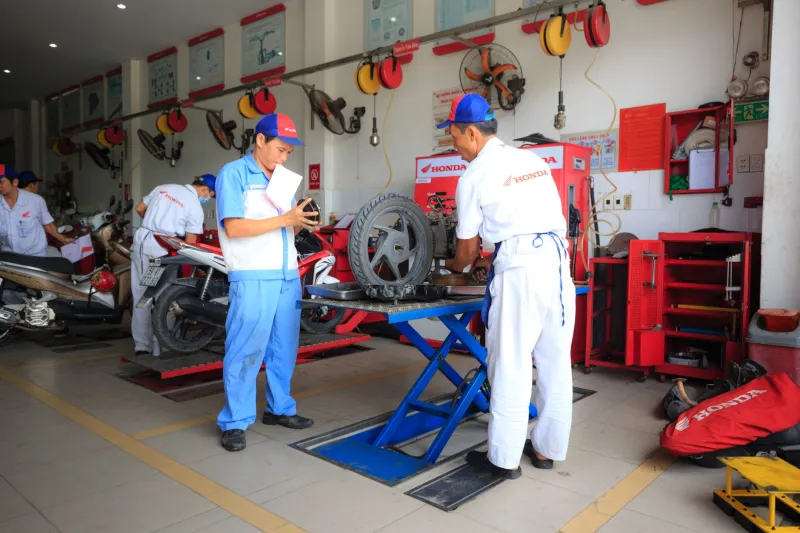
As a result, Honda dealerships in Indonesia have developed documentation cultures that are, in many respects, more granular than their American counterparts. Service intervals are tracked with precision. Technician notes are detailed. Parts replacements are logged against vehicle identification numbers. When a motorcycle leaves a Bandung service bay, the record it carries reflects not just what was done, but why—and what the technician observed in the process.
For American Honda owners whose bikes were originally sold or serviced in Indonesia before being imported or whose documentation includes any Indonesian dealer contact, this creates an opportunity. Reaching out to the originating dealership can surface records that American service histories simply cannot replicate.
The Verification Process: What American Sellers Are Actually Doing
The practice varies in its specifics, but the general approach has become recognizable. An American seller, preparing to list a used Honda, contacts an Indonesian dealer—often Honda Motor Bandung or a similar authorized facility—and requests a records search using the motorcycle's VIN or frame number. In cases where the bike was serviced in Indonesia, the dealer can often produce a detailed maintenance log that predates anything the American seller has on file.
This documentation is then compiled alongside American service records, creating what some sellers are beginning to call a "complete history package." The combination of authenticated Indonesian records and domestic maintenance logs presents a buyer with something rare in the used motorcycle space: a genuinely continuous, cross-border service narrative.
The results at auction and in private sales have been notable. Motorcycles presented with verified international documentation are commanding premiums that, in some cases, exceed what the verification effort cost by a substantial margin. Buyers respond to completeness. They respond to transparency. And they respond to the implicit message that a seller willing to authenticate a bike's history across international channels has nothing to hide.
What This Trend Reveals About the American Market's Blind Spots
The emergence of this practice points to a broader truth about how American motorcycle buyers and sellers have historically undervalued documentation. In markets where motorcycles are primary transportation rather than recreational equipment, service records are treated as essential assets—as integral to a vehicle's value as its mechanical condition. The idea that a well-documented bike might be worth significantly more than an identical, poorly documented example is not controversial in Bandung. It is simply understood.
In the United States, that understanding has been slower to develop. The recreational framing of motorcycle ownership has allowed a more casual attitude toward documentation to persist. Sellers have accepted lower prices rather than invest in verification. Buyers have accepted risk rather than demand proof. The market has settled into a comfortable inefficiency that disadvantages everyone who has genuinely cared for their machine.
The sellers now reaching out to Indonesian dealers are, in a meaningful sense, arbitraging that inefficiency. They are bringing international documentation standards to a domestic market that has not yet fully demanded them—and they are being rewarded for it.
The Competitive Advantage of Verified History in a Crowded Listing Environment
Consider the practical reality of listing a used Honda in any major American market today. Platforms like Cycle Trader, Facebook Marketplace, and Craigslist are saturated with inventory. Buyers scroll past dozens of listings before pausing on one. What makes a listing pause-worthy is not always the photograph or the price—it is the presence of detail that signals a seller who takes the transaction seriously.
A listing that references authenticated dealer records, including documentation sourced from an authorized Honda facility in Indonesia, communicates something that generic claims of "well maintained" simply cannot. It communicates verifiability. And in a market where buyers have been conditioned to distrust seller claims, verifiability is a premium feature.
For sellers willing to invest the time and modest effort required to pursue international record verification, the return on that investment has proven meaningful. Not every motorcycle will have Indonesian service history to surface. But for those that do, the documentation represents an underutilized asset that the market is now beginning to price appropriately.
A Model Worth Adopting More Broadly
At Honda Motor Bandung, we believe the principles underlying this trend extend beyond the narrow case of cross-border documentation. The discipline of treating service records as permanent, transferable assets—of maintaining documentation with the same care applied to the motorcycle itself—is one that benefits every Honda owner, in every market.
American riders who have never considered the resale implications of their maintenance documentation would do well to start. Every service visit is an opportunity to create a record. Every authenticated record is a future selling point. And as the used Honda market becomes increasingly sophisticated in its evaluation of pre-owned inventory, the sellers who arrive prepared with complete, verifiable histories will consistently outperform those who arrive with only their word.
The Pacific is wide. But the documentation standards that Indonesian dealers have long maintained are closer to American sellers than they have ever been—and the market is beginning to recognize their value.