Beyond the Dashboard: How Bandung Technicians Read a Honda's Hidden Language Before Warning Lights Ever Appear
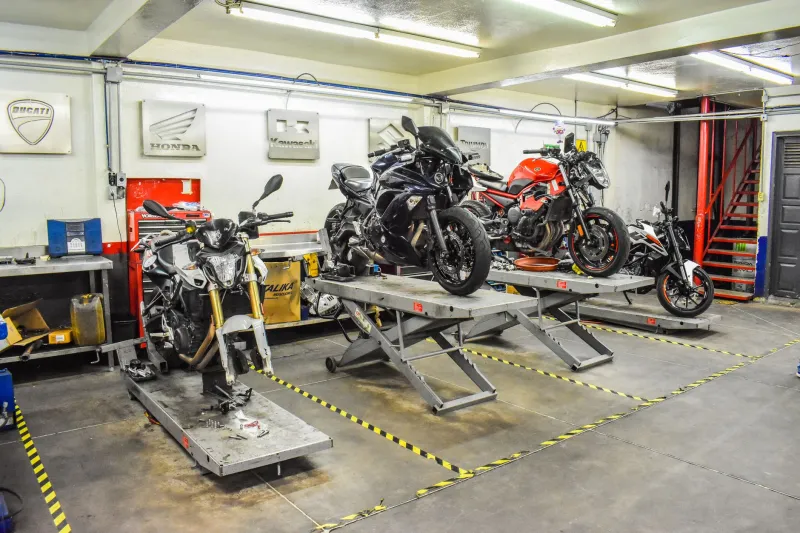
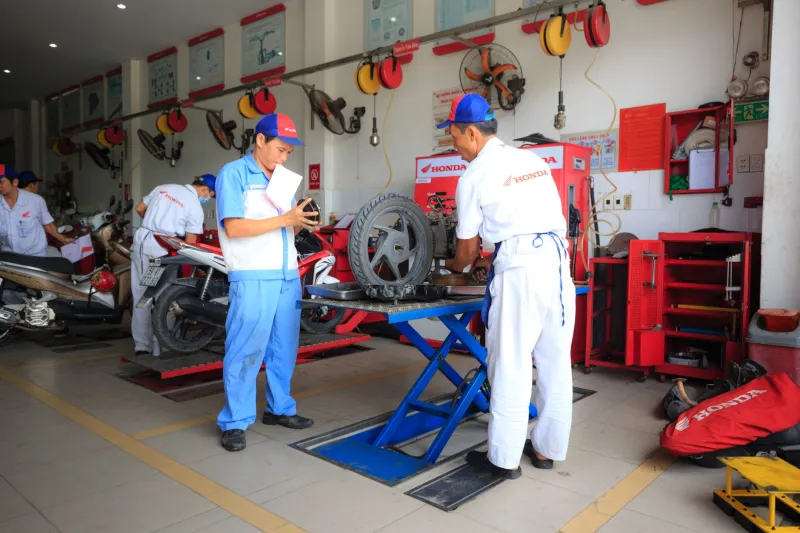
There is a moment, familiar to every seasoned mechanic at Honda Motor Bandung, when a motorcycle rolls into the service bay and begins communicating before a single tool has been lifted. The engine idles with a faint irregularity. The throttle returns with just a fraction too much resistance. A barely perceptible vibration travels through the frame at a frequency that does not quite match the RPM. To an untrained ear, none of this registers as significant. To a technician who services dozens of Honda motorcycles every week, it is the opening paragraph of a detailed diagnostic report.
For many American Honda owners, however, that report goes unread entirely.
The Comfort Trap of Modern Instrumentation
Modern Honda motorcycles are engineering achievements in rider convenience. Fuel injection systems self-calibrate. Onboard diagnostics monitor sensor outputs continuously. Digital instrument clusters display real-time data with precision that would have seemed extraordinary a generation ago. These technologies are genuinely valuable, and Honda's investment in rider-facing instrumentation reflects a deep commitment to safety and usability.
The unintended consequence, though, is a kind of diagnostic passivity that has settled into American riding culture. When the dashboard says everything is fine, riders tend to believe it—and why wouldn't they? The interface is designed to be reassuring. Warning lights are engineered to trigger only when a measurable threshold has been crossed. By definition, they respond to conditions that have already developed, not conditions that are quietly developing.
In Bandung, where Honda motorcycles serve as primary transportation for hundreds of thousands of daily commuters and where service intervals must be managed with economic precision, waiting for a warning light is simply not an option. The cost of a reactive repair—one that could have been prevented—falls directly on the rider. That reality has shaped a diagnostic culture built entirely around early detection.
What a Throttle Response Actually Communicates
One of the first things a Bandung technician assesses is throttle response quality—not whether the engine accelerates, but how it accelerates. A Honda engine in proper health delivers power in a smooth, linear progression with no hesitation at the transition point between closed and open throttle. When fuel injector deposits begin accumulating, or when the throttle body develops even minor wear in its bore, that transition develops a subtle softness. The engine still responds; it simply does not respond with the same immediacy.
American riders frequently interpret this softness as a characteristic of their particular model or as an acceptable consequence of higher mileage. Bandung technicians recognize it as an early indicator that injector cleaning or throttle body inspection is overdue—typically weeks before any sensor would flag an anomaly in the onboard diagnostic system.
The practical takeaway for US owners is straightforward: periodically perform a deliberate throttle response test on a familiar stretch of road. Note the exact character of acceleration from a rolling start. Any gradual softening over several weeks is worth discussing with a qualified Honda technician, even if no warning light accompanies it.
Vibration as a Diagnostic Language
Every motorcycle vibrates. The engineering question is always which vibrations are inherent to the design and which are signals of something changing within the mechanical system. Bandung technicians develop a calibrated sensitivity to this distinction through sheer volume of service experience—a technician who has worked on the same Honda platform for several years carries an internal reference point that no diagnostic software can fully replicate.
Chain tension is one of the most common sources of diagnostic vibration information. A chain that has stretched beyond its service specification introduces a rhythmic vibration through the swingarm and footpegs that intensifies at specific RPM ranges. Riders who spend significant time on their motorcycles often stop noticing this vibration because it develops gradually. Technicians who encounter the motorcycle fresh, without the accumulated familiarity of daily use, detect it almost immediately.
Similarly, wheel bearing degradation produces a low-frequency resonance through the handlebar at highway speeds that is distinct from wind buffeting or road surface feedback. It tends to appear intermittently at first, becoming more consistent as the bearing deteriorates. Many American riders attribute this sensation to tire pressure variation or road quality—both reasonable assumptions—without considering the bearing as a source.
Sound Patterns That Precede Failure
The acoustic environment of a running Honda engine contains a remarkable amount of diagnostic information. Valve clearance, for instance, produces a characteristic ticking sound when it drifts outside specification. In the United States, this sound is frequently dismissed as normal mechanical noise, particularly on air-cooled engines where some valve train sound is expected. Bandung technicians, however, distinguish between the baseline mechanical sound profile of a properly maintained engine and the slightly elevated frequency that indicates clearances requiring adjustment.
Cam chain tensioner wear follows a similar pattern. The early stages produce a faint rattling sound at cold start that disappears within thirty seconds as oil pressure stabilizes. Because it resolves so quickly, riders rarely mention it during service visits. In Bandung's service culture, customers are specifically asked about cold-start behavior as a routine intake question, because that thirty-second window contains valuable diagnostic information that a warmed-up inspection would never reveal.
American Honda owners can adopt this practice immediately. Keep a brief mental log of how your motorcycle sounds during the first thirty seconds after a cold start, and note any changes over time. If a sound appears and then disappears as the engine warms, that is worth reporting—not dismissing.
Building a Sensory Maintenance Habit
The diagnostic approach practiced in Bandung is not mystical or inaccessible. It is the product of deliberate attention applied consistently over time. What Bandung technicians possess that most American riders lack is simply a structured habit of observation—one that begins the moment a motorcycle is started and continues throughout every ride.
This habit can be cultivated. Begin each ride with a brief, intentional assessment: How does the engine sound at cold start? How does the throttle feel at the first acceleration? Is there any vibration character that differs from the previous ride? End each ride with an equally brief review: Did anything feel different today? Was there any sound, sensation, or behavior that was unfamiliar?
None of this requires mechanical expertise. It requires only the willingness to treat your Honda as a communicating system rather than a passive appliance—and to bring those observations to a qualified technician who can interpret them properly.
The Cost Argument for Sensory Awareness
Beyond the philosophical case for attentive ownership, there is a straightforward financial argument. The repairs that generate the highest service bills are almost universally repairs that could have been addressed earlier at a fraction of the cost. Valve adjustments are inexpensive. Valve damage from neglected clearances is not. Chain replacement is routine maintenance. Sprocket replacement necessitated by a worn chain is an additional expense. Injector cleaning is a minor service item. Fuel system damage from contaminated injectors is a significant repair.
The warning light on your Honda dashboard is a reliable last line of defense. But the most cost-effective Honda ownership does not rely on last lines of defense. It relies on the kind of early, attentive observation that has defined the maintenance culture at Honda dealerships in Bandung for decades—and that any American rider, with a modest investment of attention, can begin practicing today.